
Breaking the Echo Chamber · Consumer Awareness
The Price Is Watching You
Your phone, your loyalty card and your browsing history are quietly being used to work out the most you’ll pay. Here’s who does it, who sells the tools, who’s defending it, and where the world is starting to ban it. From Winnipeg to New York to Beijing, just in time for holiday shopping.
If two shoppers can see different prices for the same thing at the same moment, what is a price tag still telling you?
A field guide to surveillance pricing: what it is, how the plumbing works, every documented case, the companies selling the machinery, the people lobbying to keep it legal, and what Canada, Alberta and the rest of the world are doing about it.
Ground rules, same as always: receipts are at the bottom with full links. Where the evidence is solid I’ll say so. Where it’s thin, or a company denies it, I’ll say that too. Overstating the case just hands the other side an easy win.
I’ll be blunt. Retailers have spent decades manipulating us. They use fake “was” prices, countdown timers, drip fees and “only 2 left!” banners. I figured I’d seen every trick. Then I learned the price tag itself may now be built around me, using what I clicked last night, where my phone is standing, what kind of device I’m holding and what a data broker thinks my household earns. That’s a step way too far.
This week, on November 12, 2026, the New York City Council voted 44–5 to ban it. Almost nobody I talk to has even heard the term. So let’s fix that. This piece lays out what the practice is, how the plumbing works, every documented case I could verify, the companies selling the machinery, the people lobbying to keep it legal, and what Canada, Alberta and the rest of the world are (and aren’t) doing about it. Then you decide where you want to spend your money this December.
What it is (and what it isn’t)
Three terms get mashed together, and the companies involved benefit from the confusion. Here’s the difference in plain English.
Economists call this “first-degree price discrimination”: charging each buyer as close as possible to the most they’d ever pay. For most of history it was impossible outside a used-car lot or a bazaar. Cheap data, cheap cloud computing and AI models trained to predict your “pain point” have made it feasible at the scale of a grocery chain. Some critics call it “pain point pricing.”
One distinction matters. A coupon everyone can clip isn’t surveillance pricing. A senior’s discount isn’t either, because it’s published and anyone who qualifies gets it. The line gets crossed when the price or discount is secret, individual and based on data you didn’t knowingly hand over for that purpose.
| Term | What sets the price? | Everyone sees the same price at the same moment? |
|---|---|---|
| Dynamic pricing | Market conditions: demand, time, inventory, weather. Think Uber surge or hotel rates on a long weekend. | Yes. It’s annoying, but it isn’t personal. |
| Algorithmic pricing | Software sets or recommends prices, often in real time. This is the umbrella term Canada’s Competition Bureau uses. | It depends on what data goes in. |
| Surveillance / personalized pricing | You. Your location, history, device, demographics and predicted willingness to pay. | No. You and the person beside you can see different prices for the same item. |
How the machine actually works
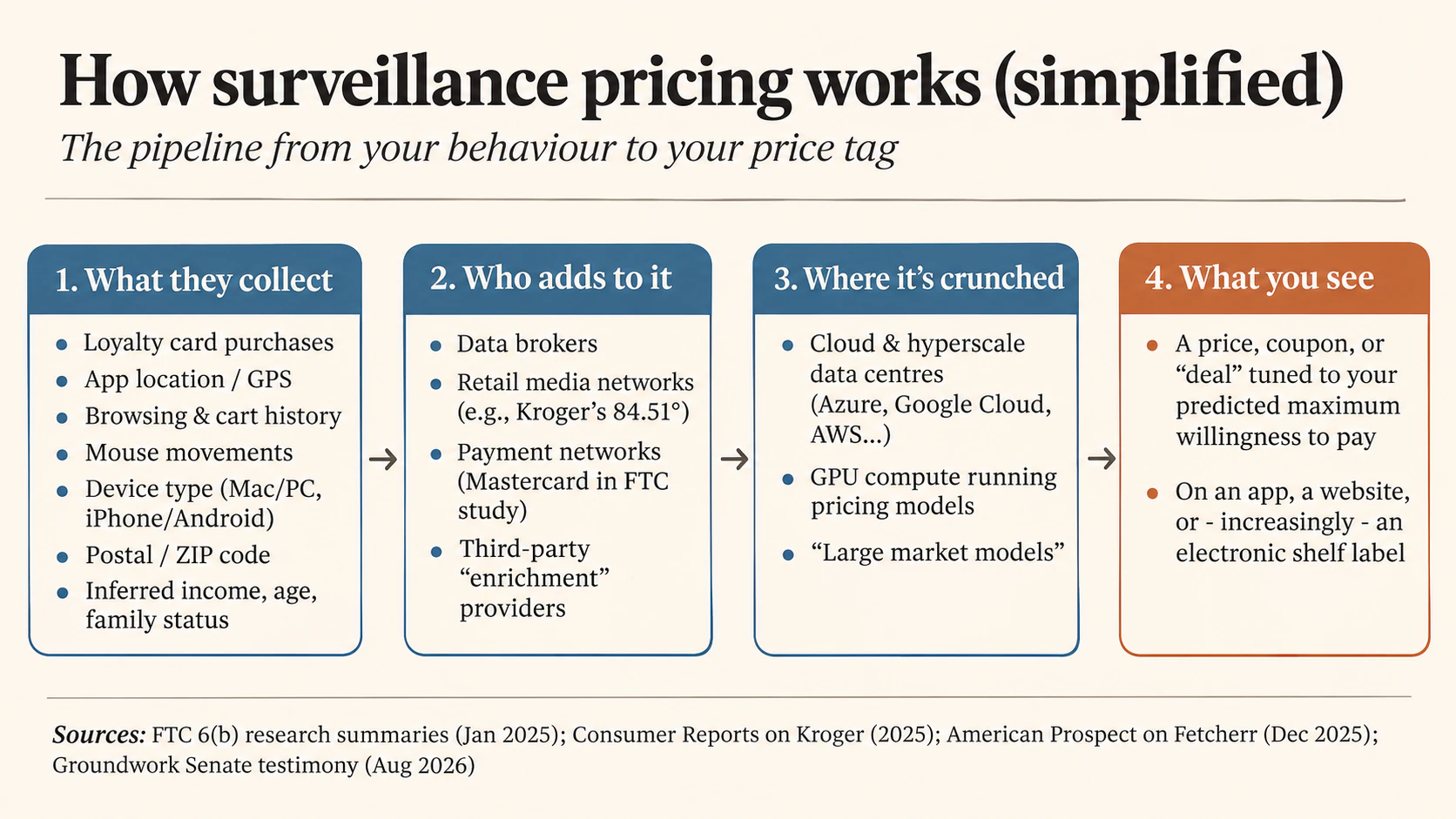
The FTC’s 2025 preliminary findings, built from documents that the pricing middlemen were legally compelled to hand over, describe the inputs. They include precise location, demographics, browsing history, items left in an abandoned cart, and even mouse movements on a webpage. In one hypothetical the FTC described, a cosmetics company targeted promotions by skin type and skin tone.
For the technically curious
- Willingness-to-pay (WTP) models. Supervised models estimate the maximum price each shopper or segment will accept. Typical features include purchase frequency, basket composition, price-sensitivity signals (do you only buy on sale?), device and OS, referral source, time of day, distance to a competitor’s store, and inferred income or education.
- Continuous experimentation. Instacart’s Eversight platform, acquired in 2022, ran automated, ongoing price tests on live shoppers. Instacart’s own marketing said shoppers didn’t know they were in an experiment. Run at scale across a store network, those tests generate what Instacart described as an “orthogonal array of data points.” That’s design-of-experiments language: many price variants tested in parallel so the model learns your price elasticity quickly.
- Reinforcement learning and “large market models.” Pricing engines from vendors such as PROS, Revionics, Fetcherr and FLYR learn which price maximizes revenue in near-real time. Fetcherr, which prices fares for Delta, WestJet and Virgin Atlantic, says it spent five years building “large market models” trained on prices, orders, competitors and even weather. It claims revenue uplift of more than 10% for clients.
- Identity resolution. Loyalty IDs, app logins, hashed emails, device fingerprints and payment tokens get stitched together so the online “you” and the in-store “you” become one profile. Consumer Reports found one Kroger shopper profile ran to 62 pages.
- Delivery surface. At first this was apps and websites. Now electronic shelf labels (ESLs) can change a shelf price wirelessly in seconds. ESLs alone are just digital price tags. The fear is ESLs fed by a pricing engine and combined with in-store tracking. Walmart is putting ESLs in all of its U.S. stores, and Sobeys ordered 5 million tags for Canada.
The upshot: the same AI stack that targets ads at you can now target prices at you. Former FTC technologist Stephanie Nguyen has written about exactly that parallel evolution.
The receipts: documented cases
These are cases where journalists, researchers or regulators actually caught it, plus the company’s response. A denial doesn’t automatically mean it’s true or false, and the reader gets to weigh it.
Notice the shape of the list. The early cases turn on location: your ZIP code, your distance from a rival store, whether your phone is in the parking lot. The more recent ones are profiles and live experiments, run on shoppers who didn’t know they were in one.
And read the right-hand column. Most of these end in a denial, a quiet change, or a settlement, which is what getting caught looks like while the practice is still legal in most places.
| Company | What was found | Status / company response |
|---|---|---|
| Staples2012 | Wall Street Journal testing found staples.com showed different prices by location, keyed to how far you lived from a rival store. Lower-income ZIP codes tended to get the higher prices. | Staples confirmed that prices vary by location for “a variety of factors.” |
| Orbitz2012 | WSJ found Mac users were steered toward hotels costing up to ~30% more. The rates were the same; the steering was the difference. | Orbitz called it an experiment and stopped. |
| Princeton Review2015 | ProPublica found an online SAT course priced from $6,600 to $8,400 by ZIP code. Asian-American families were nearly twice as likely to be quoted the higher price. | The company said prices were simply regional. |
| Target2019–2022 | KARE 11 found the app raised prices once your phone was in or near the store. In one test a TV jumped from $499.99 to $599.99 in the parking lot. | Target changed the app. California sued in 2022 and Target agreed to a $5M settlement. Target says it doesn’t personalize prices on individual data. |
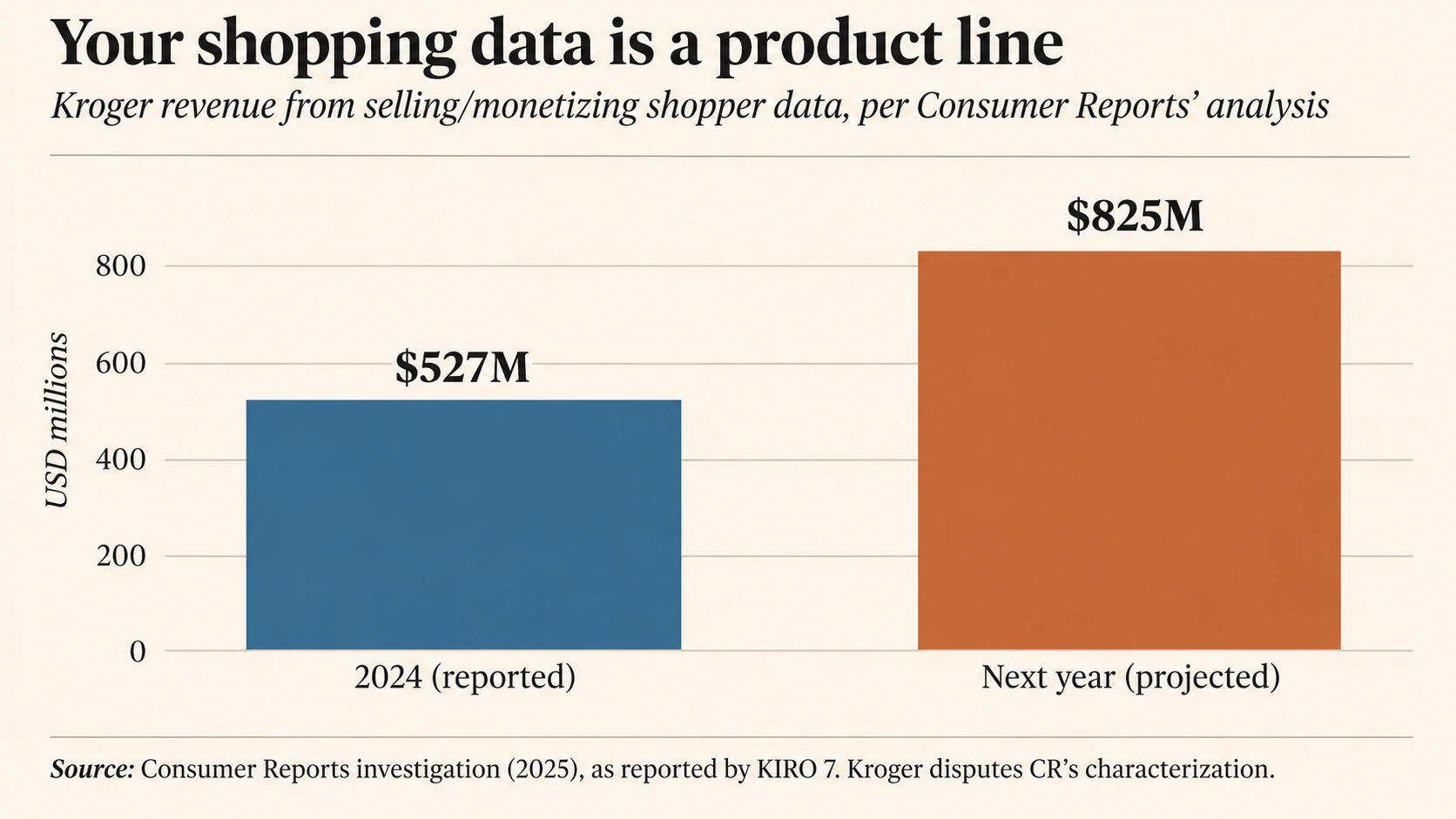
| Kroger2024–2025 | Consumer Reports found an “income predictor” used to segment shoppers for deals, profiles shared with 50+ companies, and data monetization worth $527M in 2024. U.S. senators also questioned plans for cameras on smart-shelf displays. | Kroger called CR’s allegations “misinformation” and says it doesn’t use facial recognition for pricing. Microsoft says Kroger isn’t using its facial-recognition tech. |
| Instacart2025 | 437 shoppers in 4 cities: 74% of items shown at multiple prices, an average 13% gap, up to 23%. Est. ~$1,200 a year for a family of four. | Instacart said the tests were random, not based on personal data, called the $1,200 figure “flat out wrong,” and has since ended price tests. |
| Lowe’s2025 | TV-station testing: one shopper saw a grill at $369 while everyone else saw $299. Switching store location a few miles changed prices. | No response reported. |
| Delta / Fetcherr2024–2025 | Delta told investors AI would price up to 20% of domestic fares by end of 2025. U.S. senators warned it could push fares toward each person’s “pain point.” | Delta: “Our ticket pricing never takes into account personal data.” Fetcherr says its tech doesn’t allow individualized pricing. |
| Hotel booking sites | A reporter saw an $829 nightly rate from a San Francisco IP address and over $500 less through a VPN. | Sites unnamed in the reporting. |
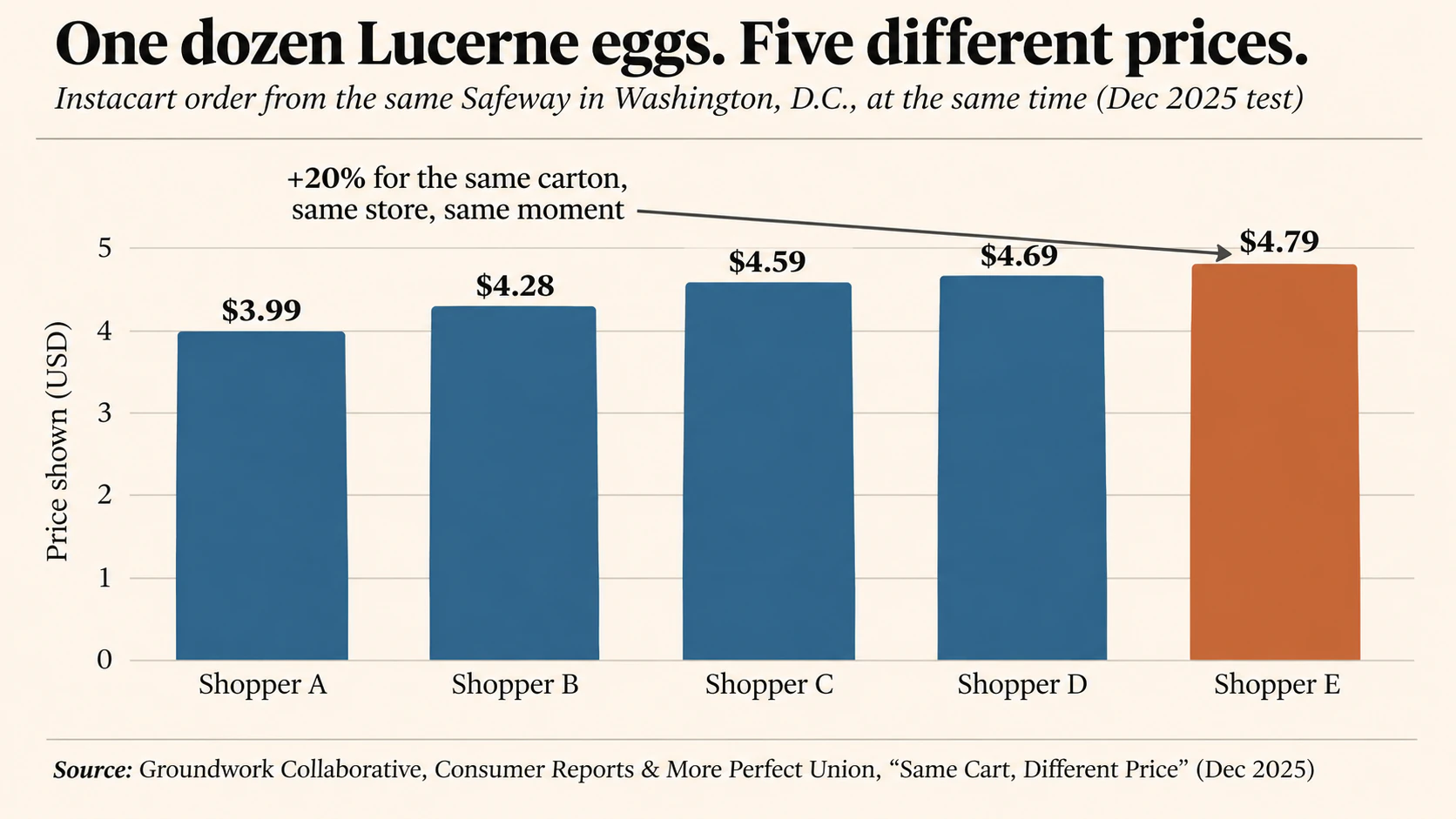
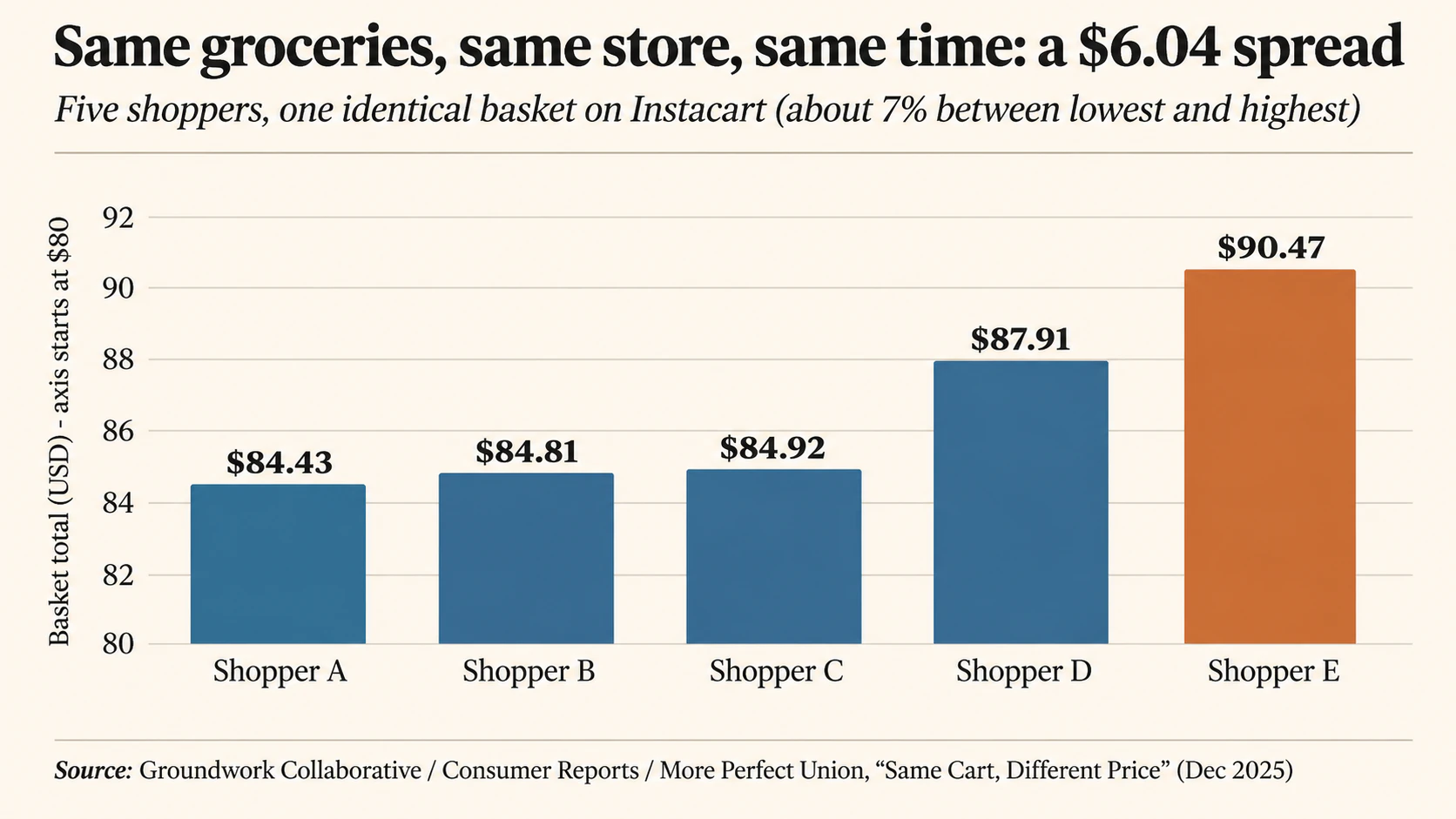
The Instacart study didn’t find that prices tracked income, race or ZIP code. It found prices varied with no visible explanation, which Instacart says was random testing. Critics answer that randomly charging some families 23% more for cornflakes is no comfort, and that the capability to target individuals is sitting right there. Both things can be true.
The arms dealers: who sells the tools
Most retailers don’t build this in-house. They buy it. When the FTC launched its study in July 2024, it ordered these eight intermediaries to explain their products. Note the names, because you’ve likely paid every one of them indirectly.
Others worth knowing: Eversight (owned by Instacart), Fetcherr (airlines, including Calgary-based WestJet), FLYR and Air Price IQ (airlines), 84.51° (Kroger’s data-science arm), and Google, whose January 2026 agentic-commerce announcement listed partners including Walmart, Kroger, Home Depot, Visa and Mastercard. Critics such as Cory Doctorow and Matt Stoller argue it lays rails for AI-set pricing. Google says that’s inaccurate and that the standard only keeps prices in AI search consistent with retailer listings. On the hardware side, Pricer and Canada’s JRTech Solutions supply ESLs to Sobeys, Metro and Canadian Tire.
Fetcherr’s own co-founder has been quoted saying its AI can “manipulat[e] the market in order to gain more profit.” Its website once promoted “hyper-personalization at scale” before that language was scrubbed.
| Firm | Why it matters |
|---|---|
| Mastercard | A payment network: it sees transaction data across millions of merchants. |
| JPMorgan Chase | The largest U.S. bank, with card and payments data. |
| Accenture | Global consultancy that implements pricing and personalization systems. |
| McKinsey & Co. | Consultancy whose euphemism for the work is “digital pricing transformations.” |
| PROS Holdings | AI pricing software, big in airlines and B2B. |
| RevionicsAptos | AI retail price-optimization engine used by grocers. |
| Bloomreach | E-commerce personalization platform. |
| Task Software | Restaurant and hospitality point-of-sale and loyalty tech. |
The defenders: who’s lobbying to keep it legal, and their best arguments
Here are the names, out in the open as promised. In fairness, here are also their arguments, put as strongly as I can.
Who’s on record against the bans
- New York City (Intro 891): the Partnership for New York City testified that the bill was unnecessary and would hurt small businesses. NetChoice, a trade group for big internet firms, testified in opposition. Tech:NYC, whose members include Amazon and Instacart, warned that companies would drop loyalty programs.
- New York State (One Fair Price Act): a coalition letter published by CCIA lists, among others, the National Grocers Association, NFIB, TechNet, Tech:NYC, the Travel Technology Association, the NY State Restaurant Association and several chambers of commerce. The tech coalition Chamber of Progress also campaigned against the state measures. The National Retail Federation sued over New York’s disclosure law.
- Uber urged Maryland legislators to reject its bill, saying it doesn’t use personal identity or device type to set prices.
- Grocery trade groups FMI and NGA pushed back after the August 2026 U.S. Senate hearing, arguing that what their members use is not what critics describe.
- Think tanks and academics: ITIF argues that a ban “merely reshuffles” prices and hurts price-sensitive shoppers. The American Action Forum urged the FTC not to act. Wharton’s Z. John Zhang testified that the “surveillance” label is misleading.
- Regulators and politicians: FTC Chair Andrew Ferguson said the term “surveillance pricing” suggests something nefarious is afoot. He ended the public comment period early in January 2025, then in August 2026 proposed a disclosure-based enforcement policy, which still isn’t a ban. In Canada, the Liberals and Conservatives both voted down the April 2026 ban motion. Ontario Premier Doug Ford called it “against the free market.”
Their best arguments, steel-manned
- “Personalization funds discounts.” Loyalty pricing, targeted coupons and “we miss you” offers are all technically personalized, and a sloppy ban could kill deals people like.
- “Price discrimination can help the poor.” In theory, if a firm can tell who’s price-sensitive, it can sell to them cheaper rather than pricing them out. Student and senior pricing work this way.
- “Prices already vary.” They vary by store, by region and online versus in store, and that’s always been legal.
- “Patchwork laws are chaos.” Different rules in every city, state and province raise compliance costs, and smaller businesses feel those costs most.
Almost every law passed so far explicitly exempts published discounts, loyalty programs and senior or veteran pricing. The “you’ll lose your coupons” line attacks a ban nobody actually wrote. Manitoba’s law only bans using personal data to raise your price, not to lower it. And the “help the poor” theory requires the algorithm’s goal to be fairness. Its actual goal is revenue. As Sen. Josh Hawley, a Republican, put it to witnesses, the point is always to maximize profit. Notice that this fight doesn’t split cleanly left versus right.
“One of the biggest scams in American history.”Sen. Josh Hawley (R), on surveillance pricing
The data-centre connection
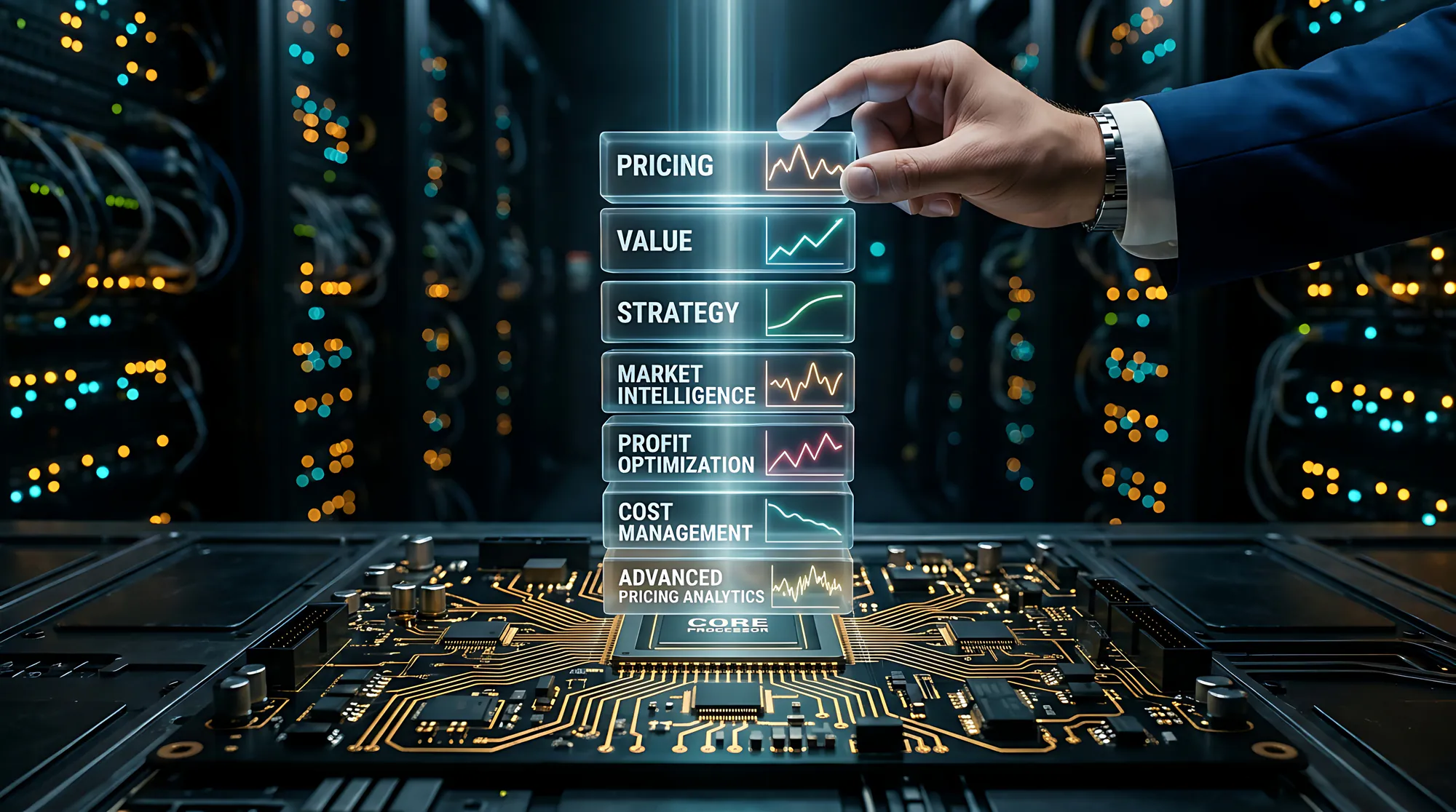
Where do data centres fit in? The link is real, though it’s structural rather than a smoking gun.
- Surveillance pricing is a compute workload. Stitching identities, scoring willingness to pay and re-pricing millions of items for millions of shoppers runs on hyperscale cloud infrastructure from AWS, Microsoft Azure and Google Cloud. Kroger’s smart-shelf work began with Microsoft Azure IoT in 2019. Groundwork’s Senate testimony names advances in cloud computing as the thing that made storing and analyzing your data at this scale possible.
- Pricing is one of the business cases for the AI build-out. The American Economic Liberties Project’s Lee Hepner put it this way about AI pricing: “That’s why we’re building all these data centers.” That’s an advocate’s claim, not a proven fact. But the companies spending hundreds of billions on GPUs need revenue, and helping retailers extract more per shopper is an obvious source.
- Alberta has a front-row seat. The province’s AI Data Centres Strategy (December 2024) aims to attract $100 billion. By February 2026 the pipeline had grown to at least 42 proposals requesting 21.1 GW, including Kevin O’Leary’s Wonder Valley near Grande Prairie, which was exempted from the provincial environmental assessment. Meta broke ground in Sturgeon County in July 2026. None of these projects has been tied to pricing specifically. But Albertans are being asked to host, power and water the infrastructure for the whole AI economy, which surveillance pricing is part of, while the province says this pricing isn’t a concern.
Data centres don’t cause surveillance pricing. They’re the engine room that makes it cheap enough to do to everyone.
Canada and Alberta: where we actually stand

Federal
- Competition Bureau: ran a public consultation in 2025 and found 60+ companies in Canada offering algorithmic pricing services. Its January 2026 “What We Heard” report flagged fairness, transparency and privacy concerns but laid out no confirmed Canadian surveillance-pricing case. The Competition Act doesn’t prohibit personalized pricing as such. It only catches collusion, abuse of dominance or deceptive conduct. In November 2025 the Bureau closed its rental-algorithm (RealPage/Yardi) probe, finding adoption too limited to substantially harm competition.
- Parliament: NDP leader Avi Lewis called the practice “downright creepy.” The NDP’s motion to ban it was voted down April 15, 2026 by Liberals and Conservatives.
- Privacy bill: AI Minister Evan Solomon tabled a new private-sector privacy bill in June 2026. He says it will treat harmful data use as a contravention and that a new regulator will issue guidance on surveillance pricing, but probably not before 2028. He also stressed that loyalty discounts won’t be outlawed.
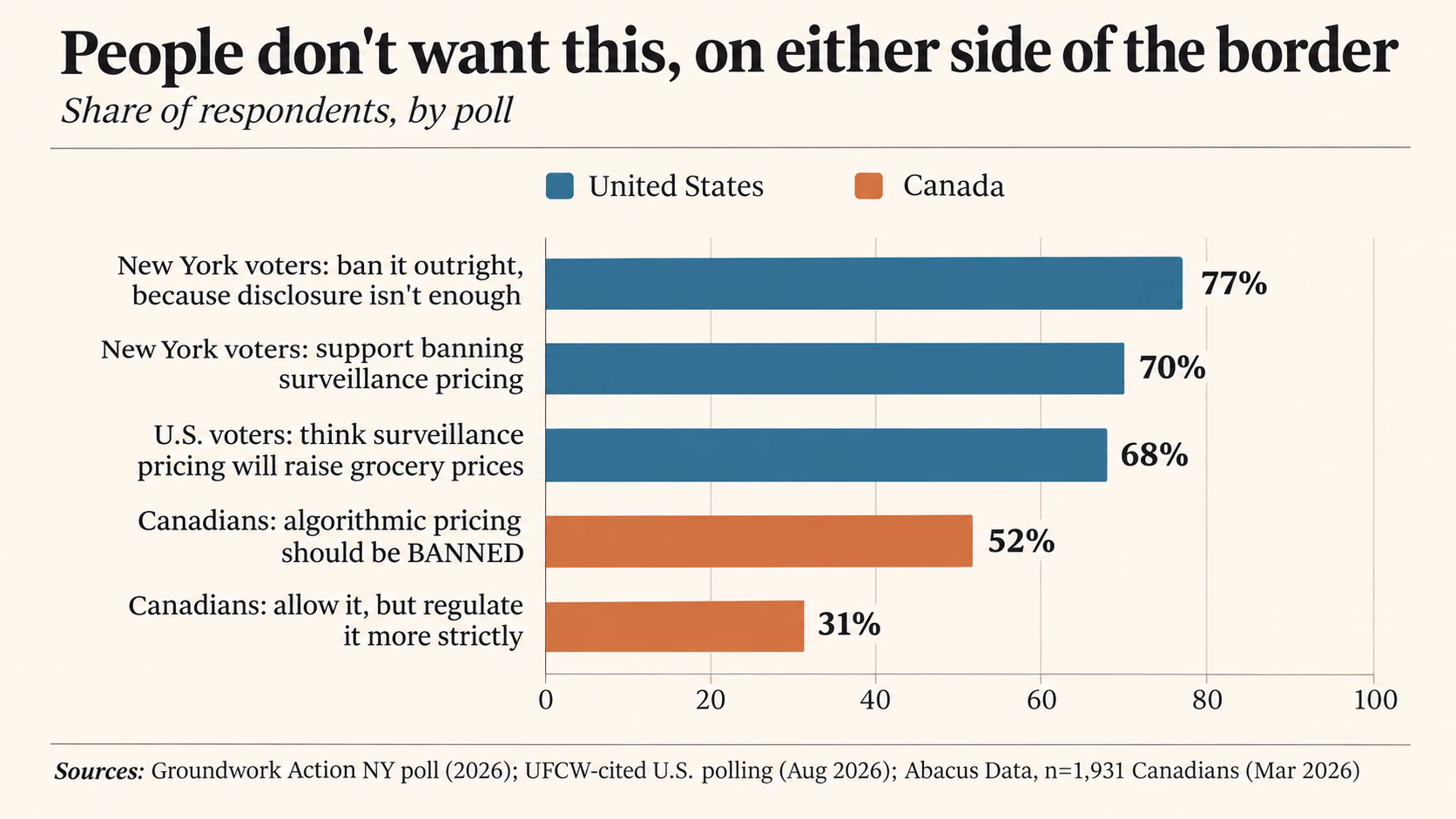
- Public opinion: an Abacus Data poll of 1,931 Canadians (March 2026) found 52% want algorithmic pricing banned outright and another 31% want it more strictly regulated.
Provinces
- Manitoba: Bill 49 makes using personal data to raise an individual’s price an unfair business practice. It covers online sales and electronic shelf labels and exempts loyalty discounts. Law since June 1, 2026, the first in Canada. Reported maximum penalties run up to $300,000 for corporations.
- Ontario: the Liberals’ Fair Grocery Prices Act (at second reading) and an Ontario NDP motion both propose bans. Premier Ford opposes them.
- Alberta: asked about it, Service Alberta Minister Dale Nally’s office said such pricing is often tied to loyalty programs: “We have not heard that this is a concern in Alberta.” The province is reviewing its private-sector privacy law (PIPA), which hasn’t had a major overhaul since 2010. The consultation closed May 1, 2026. Consider this your invitation to make it a concern.
What Canada’s big grocers say
Loblaw, Sobeys and Metro all told The Logic they do not use algorithmic pricing and have no plans to. Loblaw published a page saying it will never use this type of pricing, whether on shelf labels, online or anywhere else. Metro went further and ruled out dynamic pricing too. Meanwhile ESL rollouts continue: Loblaw since 2018, Metro for about a decade, Sobeys with a $51M, 300–350-store deployment. Walmart Canada didn’t respond to The Logic’s request for comment.
Put those public promises in writing in your memory, screenshot them, and hold them to it. A promise made in July is cheap. A law isn’t.
Around the world
The same handful of vendors and platforms sell this everywhere, but the rules haven’t caught up evenly. Approaches range from outright bans, to a mandatory disclosure label, to a regulator saying it has no easy avenue to act at all.
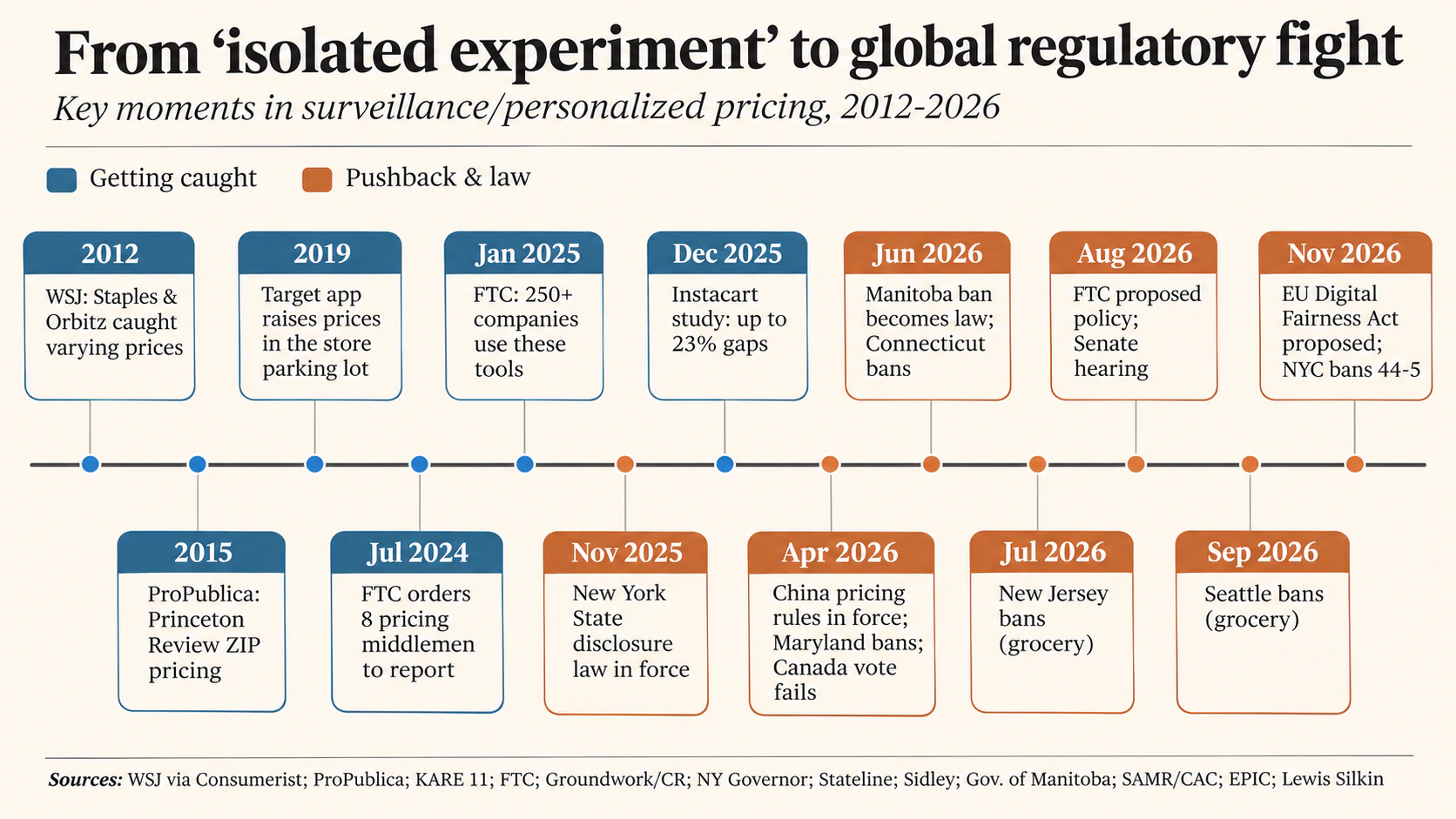
The timeline below shows how quickly that changed: from experiments caught one at a time by reporters to an open regulatory fight. The table after it shows where each jurisdiction stands now.
| Jurisdiction | Approach | Details |
|---|---|---|
| New York City | BanPassed Nov 12, 2026 | Intro 891-A, 44–5 vote. Covers online and in-person sales of goods and services. Also bars collecting, selling or sharing data to make it possible. DCWP fines up to $1,000 per violation. Loyalty programs and published discounts exempt. Mayor Mamdani expected to sign. |
| Seattle | BanGrocery | Passed 7–2 in Sept 2026. Covers big grocers and delivery apps, including Instacart and Amazon. Takes effect Sept 1, 2027. |
| Maryland | BanFood retail | First U.S. state. In force Oct 1, 2026, with a 45-day cure period. |
| Connecticut | Ban + label | Broad retail ban. Disclosure label reads “THIS PRICE WAS INCREASED BY A PRICE SETTING DEVICE USING YOUR PERSONAL DATA.” |
| New Jersey | BanGrocery | Up to $50,000 per violation, treble damages, a private right to sue, and a one-year pause on new ESLs. |
| New York State | DisclosureIn force Nov 2025 | Ban bill (One Fair Price Act) awaiting the governor. |
| U.S. federal | DisclosureProposed | FTC proposed enforcement policy, Aug 19, 2026. Senate hearing Aug 4. Bills pending from both parties. |
| Manitoba | BanRaising prices | In force June 1, 2026. |
| Canada (federal) | Nothing yet | Ban motion defeated. Privacy-bill guidance expected ~2028. |
| European Union | DisclosureTargeted ban proposed | Since 2022 (Directive 2019/2161), sellers must tell you when a price is personalized by automated decision-making. The Digital Fairness Act, proposed Nov 11, 2026, would prohibit profiling-based personalized pricing that could harm minors or vulnerable consumers, with fines reported up to 6% of turnover. |
| United Kingdom | GuidanceTransparency | The CMA ran a dynamic-pricing project from 2024 and has new fining powers (DMCCA), used so far mostly against drip pricing. No specific ban on personalized pricing. |
| Australia | Not illegal | The ACCC told a parliamentary inquiry in Oct 2026 that charging groups different prices isn’t against Australian consumer law. It has no easy avenue to act. |
| China | Ban | Known there as “big data swindling,” where loyal customers are charged more. Restricted by the 2021 Personal Information Protection Law (Art. 24) and banned outright for platforms by rules in force since April 10, 2026. |
Yes, you read that last row right. On this specific issue, China’s platform rules are currently stricter than Canada’s federal law. Make of that what you will.
Solid public reporting on rules in India, Japan, Brazil, Mexico and most of Africa and Southeast Asia. That doesn’t mean the practice isn’t there. The same vendors sell globally, and these systems are opaque by design. If you know of a case or a law in your country, send it my way and I’ll update this.
Fact-checking the viral post
The image going around (“New York City just banned stores from using customers’ personal data to set personalized prices”) is mostly accurate. The 44–5 vote, the Menin sponsorship, the $1,000-per-violation fines, the exemptions for veterans’ discounts and BOGO deals, and the Albany, Seattle, New Jersey and Connecticut references all check out. Two refinements:
- Effective date: the post says the ban takes effect a year after it becomes law. Supermarket News reports it takes effect 120 days after enactment. Check the final text at council.nyc.gov before you repeat either number.
- “Stores have started using tech that changes the price based on your browsing history”: the capability is well documented and so are several cases. But most confirmed examples are location-based, profile-based coupons or unexplained “experiments.” Proven, named cases of a major retailer raising your shelf price because of your browsing history are rarer than social media implies. That’s the reason to legislate now, before it’s routine, rather than proof that it’s already everywhere.
And the mayor still has to sign it. Mamdani says he supports it, but it isn’t law until he signs.
Your holiday defence kit

None of this requires you to stop shopping online or give up your loyalty cards. It’s about making your profile less useful, catching a price difference when it happens, and putting it on the record where it counts.
- Price-check twice: once logged in on your phone, once logged out in a private window on a computer. Different numbers are a tell.
- Turn off location access in store apps (Settings > Location > Never). That’s exactly what defeated Target’s parking-lot pricing.
- Don’t leave items sitting in carts. Abandoned-cart data is one of the documented inputs.
- Check on desktop rather than in the app. Researchers suggest apps collect more signals.
- Treat loyalty programs as a trade, not a gift. Your purchase history is the price of the points. Decide whether the points are worth it.
- Use a VPN for travel bookings. Location-based hotel and airfare differences have been documented.
- In Canada, ask what they know. Under PIPEDA (and PIPA in Alberta) you can request the personal information a business holds on you. Ask your grocer’s loyalty program for your profile.
- Screenshot and report suspicious price differences to the Competition Bureau (competition-bureau.canada.ca). In Manitoba you can now file a complaint under Bill 49.
- Tell your MLA and MP. Alberta says it hasn’t heard this is a concern. Change that.
Objections, answered in advance
No. Sales and published coupons are offered to everyone. Surveillance pricing is secret and individual. Nearly every law passed exempts ordinary discounts and loyalty programs.
Airlines have done dynamic pricing (fare buckets by demand and timing) for decades, and everyone booking that seat at that moment saw the same fare. The new concern is fares tuned to who you are.
In theory. In practice the algorithm’s objective is revenue. Some of the documented cases (Staples, Princeton Review) landed higher prices on lower-income or minority areas. Manitoba’s law still allows personal data to be used to lower a price.
Some say so convincingly, and I’ve listed their public promises. Others denied it until journalists caught them. A denial plus a law beats a denial alone.
Republican Sen. Josh Hawley chaired the Senate hearing and is drafting a bill. Republican House Oversight Chair James Comer opened an inquiry. China banned it. This isn’t a partisan issue. It’s about fair dealing.
Fair. I don’t hand them a blank cheque either. That’s why the strongest laws are narrow: no secret, data-based individual prices, with ordinary discounts protected. Transparency is a market-friendly idea, because informed buyers are what make competition work.
The same vendors and platforms (Instacart, Fetcherr, Mastercard and others) operate here. 60+ firms already sell algorithmic pricing in Canada, and Canadian grocers are installing millions of electronic shelf labels. What gets banned there tends to get tested here.
Not by themselves. They’re a digital price tag. They also save labour and reduce pricing errors. The risk is ESLs plus a personalization engine plus in-store tracking. Seattle dropped its ESL ban for that reason, after grocery workers said the labels made their jobs easier.
A denial plus a law beats a denial alone.
So, where do you shop?
I’m not going to tell you to boycott anyone. You’re grown-ups. But here’s the scoreboard as of mid-November 2026, so you can decide.
Loblaw (“we will never use this type of pricing”), Sobeys and Metro (no algorithmic pricing; Metro also no dynamic pricing).
Walmart U.S. CEO John Furner said using income, shopping history or moment of need to change prices would violate the company’s values, and Walmart told TV investigators it doesn’t use surveillance pricing.
Target says it doesn’t personalize prices on guest data. Delta says its fares never use personal data.
Instacart (price experiments; now ended). Kroger (income-predictor profiling; $527M in data revenue). Target ($5M California settlement over app pricing). Lowe’s (unexplained grill price gaps).
Staples, Orbitz, Princeton Review (historical).
The FTC-8: Mastercard, JPMorgan Chase, Accenture, McKinsey, PROS, Revionics, Bloomreach, Task Software.
The price tag used to be the one honest thing in a store: the same number for the millionaire and the single mom in line behind her.
That basic deal is worth defending. Not because I trust politicians, but because I trust a pricing algorithm built to find my breaking point even less.
Happy (and watchful) holiday shopping.
— Kelly
Sources
Every claim above traces to one of these. Where a company disputes a finding, its response is given in the text alongside it.
NYC Council vote & law
- supermarketnews.com/grocery-technology/new-york-becomes-second-city-to-ban-…
- epic.org/new-york-city-becomes-the-latest-city-to-ban-surveillan…
- lavocedinewyork.com/en/new-york/2026/11/12/julie-menins-bill-bans-surveilla…
- joemygod.com/2026/11/mamdani-to-sign-nyc-ban-on-surveillance-pricing
- intro.nyc/0891-2026
- council.nyc.gov/press/2026/05/14/3119
- nyc.gov/assets/dca/downloads/pdf/media/Advocacy-Testimony-Intro…
Opposition testimony (NYC/NY)
- pfnyc.org/news/partnership-testimony-on-surveillance-pricing
- netchoice.org/netchoice-testimony-in-opposition-to-nyc-int-891-a-bill…
- nycfoodpolicy.org/new-york-surveillance-pricing-grocery-bills
- ccianet.org/wp-content/uploads/securepdfs/2026/08/One-Fair-Price-Ac…
- mgaleg.maryland.gov/cmte_testimony/2026/ecm/1rV4Q31Ok8w6OPzaJ2fqoeVBfnNLbDi…
- theshelbyreport.com/2026/08/06/fmi-nga-push-back-after-senate-hearing-on-ai…
- itif.org/publications/2026/06/08/ban-on-personalized-pricing-is-…
- americanactionforum.org/?p=35601
NY State disclosure law
FTC 6(b) study
FTC proposed policy (Aug 2026)
- ftc.gov/system/files/ftc_gov/pdf/p034101-ftc-enforcement-policy…
- alstonprivacy.com/ftc-proposes-enforcement-policy-statement-on-personaliz…
- groundworkcollaborative.org/news/groundworks-president-and-ceo-reacts-to-ftcs-new-p…
- oversight.house.gov/wp-content/uploads/2026/09/Letter-to-FTC-Ferguson_9.9.2…
Instacart study
Kroger
- consumeraffairs.com/news/kroger-uses-income-predictor-to-shape-pricing-inve…
- therecord.media/kroger-using-loyalty-program-to-sell-customer-data
- kiro7.com/news/local/kiro-7-investigates-grocery-loyalty-programs…
- grocerydive.com/news/kroger-electronic-shelf-labels-instore-technology-…
- spectrumnews1.com/ky/louisville/news/2025/01/28/kroger-facial-recognition
Delta / Fetcherr
- axios.com/2025/07/22/delta-ai-ticket-prices-senators
- ajc.com/business/2025/07/delta-uses-ai-to-set-airfares-some-sen…
- nbcnews.com/business/travel/delta-air-lines-assures-us-lawmakers-wi…
- thestar.com.my/tech/tech-news/2025/08/02/delta-will-not-use-ai-to-set-…
- prospect.org/2025/12/02/prices-in-the-machine-ai
Target / Lowe’s / Walmart
- dappered.com/2019/02/is-targets-app-charging-more-the-closer-you-get…
- fox5atlanta.com/news/customer-concern-growing-us-retailers-adopt-next-g…
- itv.com/news/2026-10-18/ai-enhanced-pricing-tools-are-making-us…
- yahoo.com/news/team-creepy-invasive-why-could-222724516.html
- whio.com/news/local/i-team-this-is-creepy-invasive-why-you-could…
- kiro7.com/consumer/clark-howard/clark-your-life/target-corrects-e…
Staples / Orbitz / Princeton Review
U.S. state & city laws
- stateline.org/2026/08/04/states-begin-banning-surveillance-pricing-th…
- hklaw.com/en/insights/publications/2026/08/surveillance-pricing-a…
- sidley.com/en/insights/publications/2026/10/from-disclosures-to-pr…
- inplp.com/publications/the-us-regulatory-landscape-of-surveillanc…
- fox13seattle.com/news/seattle-bans-grocery-surveillance-pricing
- kiro7.com/news/local/kiro-7-investigates-seattle-bans-surveillanc…
U.S. Senate hearing
Canada: Competition Bureau
Canada: Parliament, NDP, privacy bill
- ndp.ca/news/ndp-moves-ban-surveillance-pricing-gouging-canadians
- globalnews.ca/news/11799034/ban-algorithmic-pricing-ndp-urges-carney-…
- torontomu.ca/news-events/news/2026/05/your-browsing-history-could-so…
- ctvnews.ca/business/article/canadas-new-surveillance-pricing-rules…
- policyoptions.irpp.org/2026/07/grocery-surveillance-pricing
- thetyee.ca/Analysis/2026/07/27/Canadians-Want-Surveillance-Pricing…
Manitoba Bill 49
Alberta
Canadian grocers & ESLs
Data centres
- factsmtr.substack.com/p/albertas-data-centre-rush-land-water
- albertawilderness.ca/issues/wildlands/energy/hyperscale-ai-data-centres
- baxtel.com/regions/alberta
- yalejreg.com/nc/the-price-of-surveillance-the-parallel-evolution-of-…
- techpolicy.press/big-techs-ai-shopping-tools-raise-stakes-for-surveillan…
- blog.google/products/ads-commerce/agentic-commerce-ai-tools-protoco…