Johnson & Johnson — Fifty Years of “No More Tears”
The company’s own laboratories kept finding asbestos in its baby powder. The company kept the results. It did not keep the regulators informed — and it did not stop selling.
There is no product in the world more thoroughly branded as innocent than Johnson’s Baby Powder. That was the point. Purity was the product; the talc was just the delivery mechanism. Which is why the internal lab reports are so difficult to read — not because they are shocking in tone, but because they are so calm.
What it was
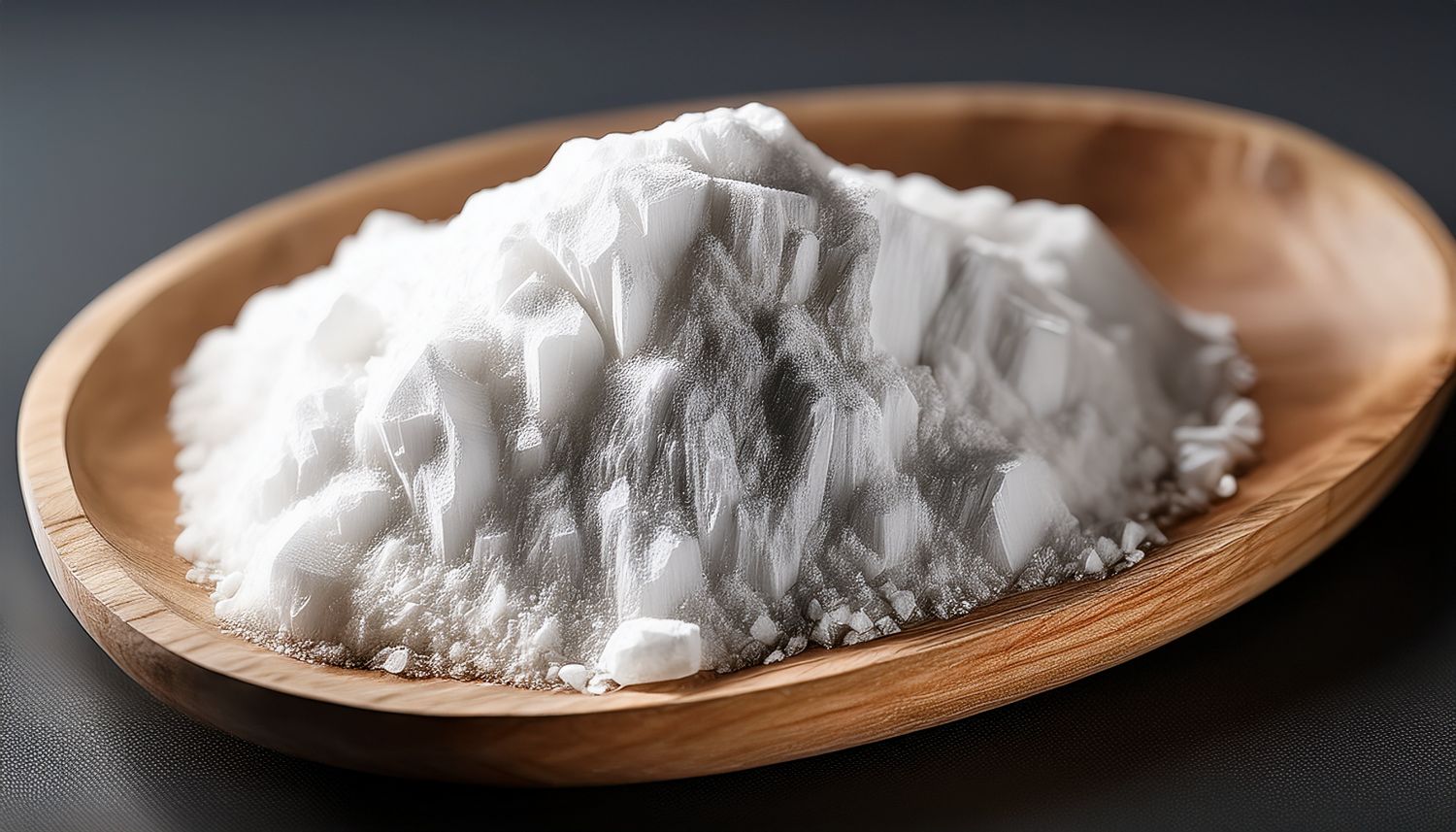
Talc is a soft mineral, mined from the ground. In geological deposits it forms alongside asbestos. The two minerals occur together, and separating them during mining and milling is difficult. This is not a controversial claim, a plaintiff’s theory, or a recent discovery. It is basic geology, and Johnson & Johnson has known it for as long as it has been mining talc.
The International Agency for Research on Cancer classifies talc containing asbestos fibres as carcinogenic to humans. It separately classifies the perineal use of asbestos-free talc body powder as possibly carcinogenic to humans, based on limited human evidence of a link to ovarian cancer.
The turn
The turn here is not a moment. It is a fifty-year absence of one.
In 1957, trace asbestos fibres were identified in talc from J&J’s Italian supplier. In the mid-1960s, talc from Vermont mines owned by a J&J subsidiary was likewise found to contain traces. And according to internal documents obtained through litigation and reported by Reuters in December 2018, from at least 1971 to the early 2000s the company’s raw talc and finished powders sometimes tested positive for small amounts of asbestos — while executives, mine managers, scientists, doctors and lawyers discussed the problem and how to handle it, and did not disclose it to regulators or the public.
The sharpest single episode is 1976. The U.S. Food and Drug Administration was weighing limits on asbestos in cosmetic talc. J&J assured the agency that no asbestos had been detected in samples produced between December 1972 and October 1973. It did not mention that at least three tests by three different laboratories between 1972 and 1975 had found asbestos in its talc — in one case at levels described as “rather high.”
The company did not lie to the regulator. It answered a narrow question accurately and let the answer do the work of a lie.
The same document trove, Reuters reported, depicts successful efforts to influence U.S. regulators. And court filings have shown the company increased marketing to African American and Hispanic women — groups with higher rates of powder use — even as the contamination question remained unresolved internally.

What it cost
Mesothelioma can take up to fifty years to develop. That latency is why the bill for the 1970s arrived in the 2010s, and why it is still arriving.
- As of January 2026, 67,229 federal lawsuits were pending against Johnson & Johnson over its baby powders — the largest active multidistrict litigation in the United States. Counting state courts, more than 90,000 claims have been filed.
- December 2025: a Baltimore jury awarded $1.5 billion to a man with peritoneal mesothelioma — the largest single-plaintiff talc verdict to date. The same month brought $65.5 million in Minnesota and $40 million to two ovarian cancer patients in Los Angeles.
- October 2025: a California jury awarded $966 million to the family of a woman who died of mesothelioma. A judge later struck the punitive portion, cutting it to $16 million. The family is appealing. Both numbers are true; anyone citing only one is selling something.
- A 2025 Los Angeles jury found the company had acted with “malice, oppression or fraud.”
In 2019 the FDA found chrysotile asbestos in a sample of Johnson’s Baby Powder, and the company recalled 33,000 bottles. The Department of Justice opened an investigation the same year.
The laundering
The rebrand came in three movements.
First, the product. In May 2020, J&J stopped selling talc-based baby powder in the United States and Canada. In August 2022 it announced a worldwide end to the talc formula, completed in 2023, and introduced a cornstarch-based line under a new name: Vivvi & Bloom. A fresh brand, unburdened by fifty years of documents.
Second, the liability. Beginning in 2021, J&J attempted the manoeuvre known as the Texas Two-Step: it created a subsidiary, LTL Management LLC, assigned the talc liabilities to it, and had the subsidiary declare bankruptcy two days later — while Johnson & Johnson itself remained one of the most profitable companies on earth. Courts rejected the strategy three times: on appeal in January 2023, again in July 2023, and finally in 2025, when a Houston judge dismissed a third attempt routed through a new entity, Red River Talc LLC. In April 2025 the company abandoned the strategy and began litigating cases individually. Reporting indicates it spent over $178 million pursuing the bankruptcy route and roughly $1 billion on the litigation overall.
Congressional critics were blunt about the parallel. Representative Carolyn Maloney compared it directly to the Sacklers — a legal loophole used to escape accountability while ordinary people are stiffed.
Third, the story. J&J maintains that its talc products are safe and asbestos-free, describes the claims as meritless, and says it will vigorously litigate them. It has also gone after individual researchers: in May 2025 it took further legal action against Dr. Jacqueline Moline, whose 2020 study linked cosmetic talc to mesothelioma.
The part that should worry you most
On 28 November 2025, the FDA withdrew a proposed federal rule that would have required companies to test talc-containing cosmetics for asbestos using the most reliable detection methods. There is now no federal mandate to test.
Fifty years of internal documents, ninety thousand lawsuits, a billion-and-a-half-dollar verdict — and the regulatory outcome is that nobody has to look.
The lesson
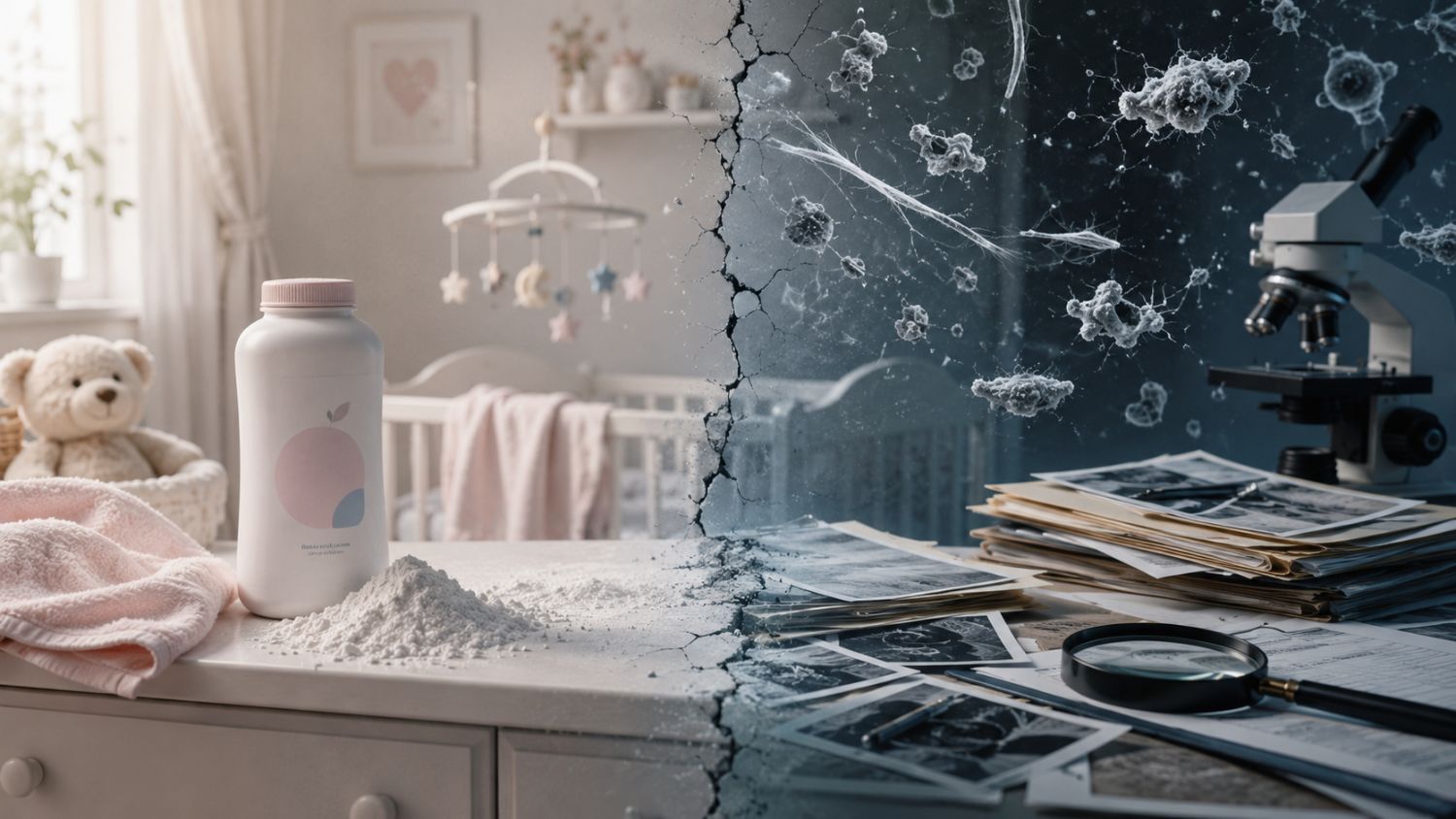
J&J never had to hide anything, in the conspiratorial sense. The documents existed. The tests were run. The company simply never volunteered them, answered narrowly when asked, and spent decades ensuring that the word attached to the product was “baby” rather than “talc.”
Innocence isn’t a property of a product. It’s a marketing budget.
Sources
- Reuters — Girion, L. “Johnson & Johnson knew for decades that asbestos lurked in its talc,” Special Report, 14 December 2018 — the foundational investigation; source for the 1971–early 2000s testing record, the 1976 FDA submission, and the three labs finding asbestos 1972–1975. Reuters published 57 supporting documents including internal J&J lab reports from 1972–2003.
- The New York Times. “Johnson & Johnson Feared Baby Powder’s Possible Asbestos Link for Years,” 14 December 2018.
- UCSF Talc Litigation Collection. Approximately 3,500 primary documents released through litigation, posted November 2023 by the UCSF Program on Reproductive Health and the Environment — the primary-source archive.
- International Agency for Research on Cancer (WHO). Classification of asbestos-containing talc as carcinogenic to humans; perineal use of non-asbestos talc body powder as possibly carcinogenic to humans.
- U.S. Right to Know. “Johnson & Johnson talc baby powder asbestos: key facts” — litigation tracking, bankruptcy chronology, the $178 million Texas Two-Step spend, Rep. Maloney statement, and J&J’s response (“vigorously litigate” / “meritless”).
- Court records and verdict reporting. Baltimore, $1.5B; Minnesota, $65.5M; Los Angeles, $40M; California, $966M reduced to $16M; Los Angeles “malice, oppression or fraud” finding; Mississippi consumer-protection settlement, $75M; tentative $700M settlement with 40+ states.
- Bankruptcy rulings. Third Circuit rejection, January 2023; Judge Michael Kaplan dismissal, July 2023; Houston dismissal of the Red River Talc plan, 2025; J&J abandonment of the strategy, April 2025.
- U.S. Food and Drug Administration. 2019 chrysotile asbestos finding and 33,000-bottle recall; withdrawal of the proposed cosmetic talc asbestos testing rule, 28 November 2025.
- Moline, J. et al. “Mesothelioma Associated With the Use of Cosmetic Talc,” Journal of Occupational and Environmental Medicine, January 2020;62(1):11–17.
- Johnson & Johnson. Company position published at its “Facts About Talc” website — quoted here as the company’s own account.
Every claim in this piece is drawn from primary documents, court records, or the company’s own statements. Where a verdict was later reduced, we reported both figures. — Breaking the Echo Chamber