Nestlé — The Nurses Who Weren’t Nurses
They wore the uniform. They handed out free samples in maternity wards. They were saleswomen. And by the time the free tins ran out, a mother’s own milk had already dried up.
Most corporate scandals are about what a company hid. This one is about what a company wore. The Nestlé infant formula scandal produced the first international consumer boycott of the modern era, a binding-ish global marketing code, and a defence at a U.S. Senate hearing so brazen it has outlived everyone in the room.
It also produced a rebrand — from the company that fought the boycott into a self-described “nutrition, health and wellness company.”
What it was

Henri Nestlé’s “Milk Food” was invented around 1867 and exported into European colonies almost immediately. Infant formula is not, in itself, a villain: it saves the lives of babies whose mothers cannot breastfeed. The product was never the problem. Where it was sold, and how, was.
The warning came early and was ignored for forty years. In 1939, a physician named Cicely Williams — the doctor who first described kwashiorkor — delivered an address to the Singapore Rotary Club titled “Milk and Murder,” reporting infant deaths she attributed to bottle-feeding among mothers without the means to use formula safely. By the 1960s, infant nutrition expert Derrick Jelliffe had a name for the phenomenon: commerciogenic malnutrition — malnutrition manufactured by marketing.
The turn
Through the 1960s and 1970s, Nestlé marketed infant formula aggressively across Africa, Asia, and Latin America as modern, scientific, and superior to breast milk. It controlled more than 40 percent of an estimated $1.72 billion market.

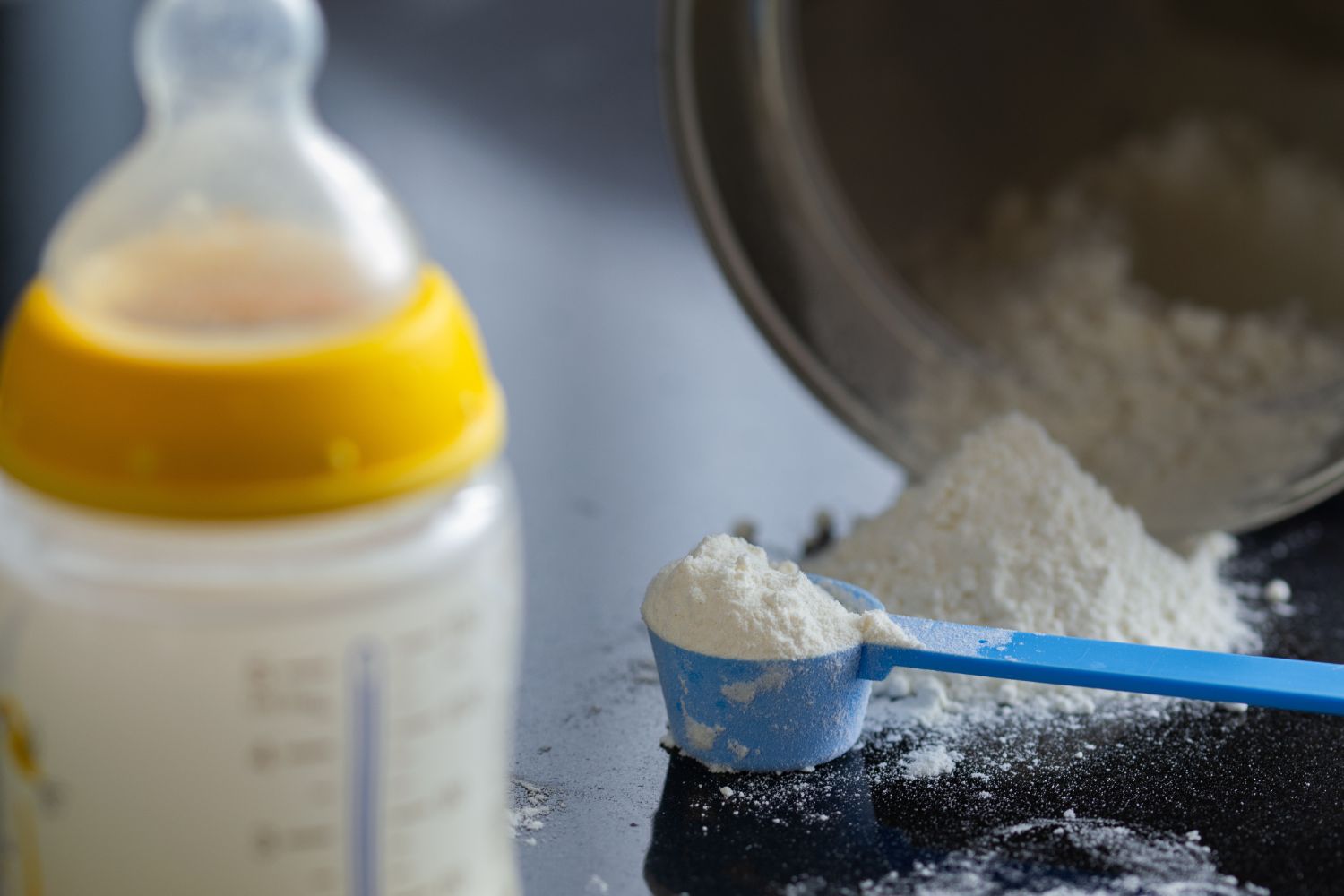
The mechanism was elegant and lethal. Free samples were distributed in hospitals and clinics, frequently by saleswomen dressed in nurses’ uniforms — the “milk nurses.” A new mother would use the free formula during the days when lactation is established. Lactation is a supply-and-demand system: milk that is not drawn is not made. By the time the samples ran out, her own milk was gone. She now had to buy formula. Permanently.
Give away the first tin, and the customer cannot leave. That is not a marketing strategy. It is a biological trap.
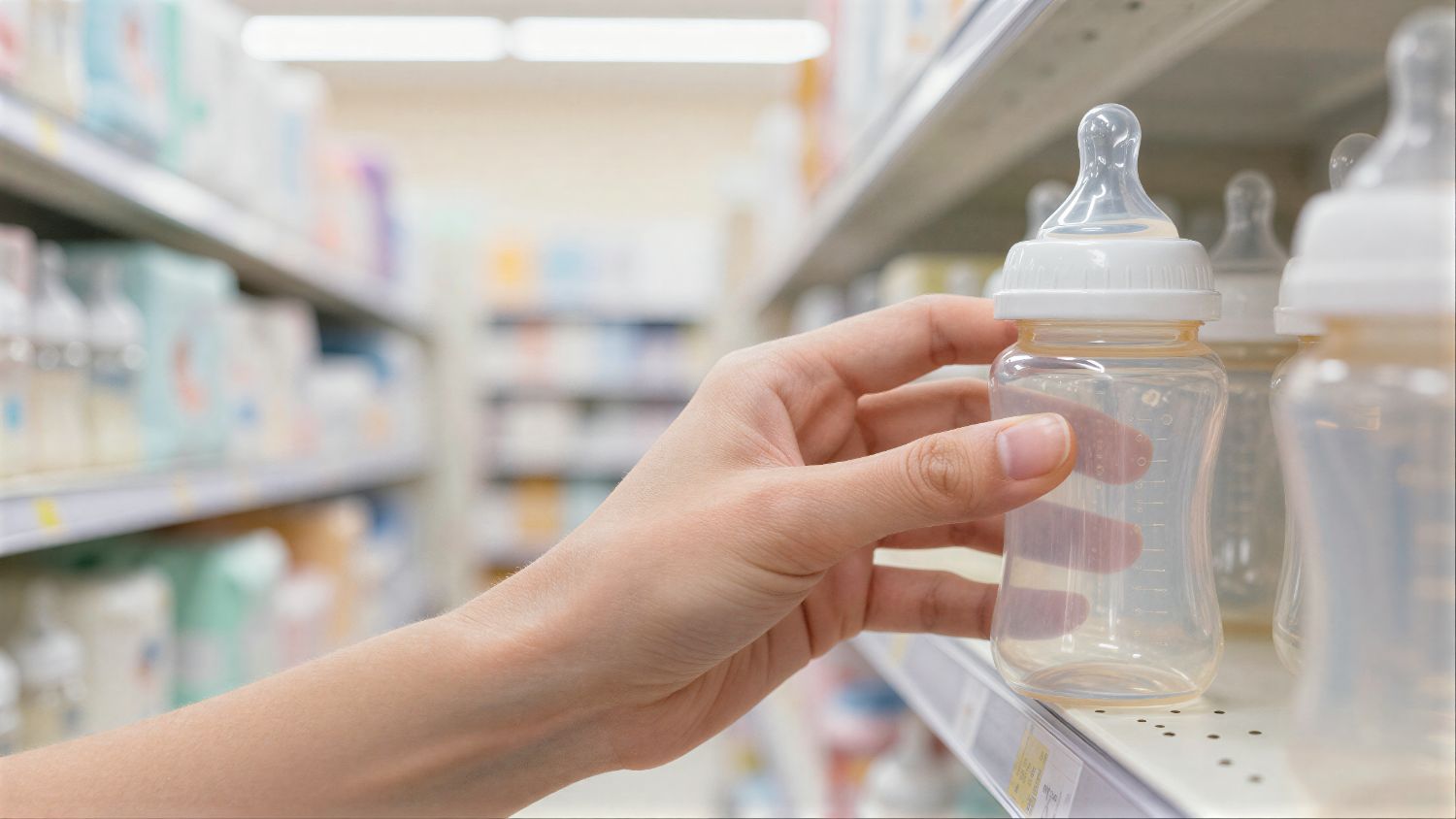
What followed was predictable to anyone who looked. Mothers who could not afford the ongoing cost diluted the formula to stretch it. Mothers without clean water mixed it with what they had. Instructions were printed in local languages that many recipients could not read, and assumed sterilisation facilities that did not exist. The result was malnutrition and preventable infant death.
What it cost
Here the record demands care, because the numbers in circulation vary enormously and the largest of them will not survive scrutiny.
At the 1978 Senate hearings, Derrick Jelliffe of UCLA testified that 10 million infant deaths per year could be attributed to the introduction of infant formula. That figure was repeated in the press for years. It is almost certainly far too high, and other contemporaneous estimates were substantially lower.
The most rigorous estimate available comes from a 2018 National Bureau of Economic Research working paper by Anttila-Hughes, Fernald, Gertler, Krause and Wydick, which used household survey data to compare infant mortality before and after Nestlé entered a given market.
Sixty-six thousand babies in a single year is not a number that needs inflating. Anyone who inflates it is doing Nestlé a favour — because an exaggerated figure is the easiest thing in the world to debunk, and debunking the number lets you skip the story.
The defence
On 23 May 1978, U.S. Senator Edward Kennedy opened hearings into the marketing of breast-milk substitutes in the developing world. Nestlé sent a spokesman, Oswald Ballarin. Asked whether the company bore responsibility for infants dying after formula was mixed with contaminated water, Ballarin’s answer entered history:
We cannot have that responsibility, sir… How can I be responsible for the water supply? I cannot help it.Oswald Ballarin, Nestlé — to the Kennedy subcommittee
Kennedy’s reply framed the entire question of corporate accountability for the next fifty years: is it enough to establish a code for product use and then disown the realities of product use?

Nestlé’s conduct outside the hearing room was no better. When the Third World Action Group published a German translation of War on Want’s 1974 report The Baby Killer under the title Nestlé Kills Babies, the company sued for libel in Bern. It won in 1976 — technically. The defendants were fined 300 Swiss francs, and Judge Jürg Sollberger told Nestlé it must fundamentally modify its publicity methods. TIME called it a moral victory for the defence.
Then came Nestlégate. In 1981 a confidential memo from Nestlé vice-president Ernest Saunders was leaked, advising that the company should not attack activists directly but arrange for apparently unrelated third parties to speak on its behalf. He cited approvingly an article by the Ethics and Public Policy Center that had branded the boycotters “Marxists marching under the banner of Christ.” The Washington Post subsequently reported that Nestlé had given the EPPC $25,000.
The reckoning
The boycott launched in Minneapolis on 4 July 1977 and spread to Canada, Australia, New Zealand, and across Europe. In 1979 the WHO and UNICEF convened the meeting that produced the International Code of Marketing of Breast-milk Substitutes, adopted by the World Health Assembly in 1981 by a vote of 118 to 1. The single vote against was the United States.
The Code bans free samples, promotion in health facilities, and marketing to the public. It is not legally binding in itself; it becomes law only where a country enacts it. As of 2020, 136 member states had some legal measure related to the Code, and few reflected it fully.
The laundering
Nestlé did not shrink. It rebranded itself as a “nutrition, health and wellness company” and expanded into bottled water, confectionery, pet food, and pharmaceuticals — while remaining the market leader in breast-milk substitutes. The company states on its website that it follows the WHO Code as implemented by national governments everywhere in the world, publishes annual compliance reporting, and operates a whistleblower scheme.
Note the construction: as implemented by national governments. The Code is only as strong as each country’s legislation, and most countries’ legislation is weak. The commitment is real, and it is also a door left open.
The accusations have not stopped. In 1999 the UK Advertising Standards Authority ruled against Nestlé for claiming it marketed infant formula “ethically and responsibly,” finding the company could not substantiate it. In 2024, Swiss nonprofit Public Eye and IBFAN reported that Nestlé added sugar and honey to infant products sold in lower- and middle-income countries while selling healthier versions in wealthy markets.
The lesson
Nestlé never sold a defective product. Formula works, when you have clean water, money, literacy, and sterilising equipment. The company sold it to people who had none of those things, and then said the water was not its problem.
The rebrand did not fix that. It just changed what came to mind first.
Ask what a company does when the harm is undeniable and the profit is still available — and you will learn everything the advertising was built to hide.
Sources
Primary and reported sources consulted
- Michael Muller / War on Want — The Baby Killer: A War on Want Investigation into the Promotion and Sale of Powdered Baby Milks in the Third World (1974) — the founding document of the campaign.
- Anttila-Hughes, Fernald, Gertler, Krause & Wydick — “Mortality from Nestlé’s Marketing of Infant Formula in Low and Middle-Income Countries,” NBER Working Paper 24452 (2018) — source for the ~66,000 infant deaths in 1981 at peak; also documents Jelliffe’s higher Senate estimate and notes other estimates were lower.
- U.S. Senate — Hearing on the promotion and use of infant formula in developing nations, 23 May 1978, chaired by Sen. Edward Kennedy — source for the Ballarin exchange (“How can I be responsible for the water supply?”). Video of the exchange is publicly archived.
- World Health Organization — International Code of Marketing of Breast-milk Substitutes, adopted by the 34th World Health Assembly, Resolution WHA34.22 (1981) — 118 votes in favour, 1 against (United States).
- Global Nonviolent Action Database (Swarthmore) / Commons Library — “International groups boycott Nestlé products to end indiscriminate advertising, 1977–1984” — boycott chronology; the Saunders memo and the EPPC $25,000 donation reported by the Washington Post; market-share figures.
- New Internationalist — “The Baby Food Tragedy” (1973) and subsequent coverage — Cicely Williams’ 1939 “Milk and Murder” address; Jelliffe’s “commerciogenic malnutrition”; the 118–1 Code vote; boycott launched 4 July 1977; relaunched 1988.
- UK Advertising Standards Authority — Ruling against Nestlé, May 1999 — company could not substantiate its claim to market infant formula “ethically and responsibly.”
- Public Eye / IBFAN — 2024 report on added sugar and honey in Nestlé infant products sold in lower- and middle-income countries.
- Nestlé — Company statements on WHO Code compliance, published at nestle.com — quoted here as the company’s own position.