Canada Dry —One Drop FillsSeventy Cans
Nobody died. That is exactly why this entry belongs here. If the system can’t deliver justice on a can of pop — an obvious, trivial, admitted deception with no science to argue about — ask what it manages on asbestos.
Every other entry in this series has a body count. This one has a Vancouver father who thought he was buying his family something a little bit healthy, and a judge who said out loud what the rest of the file only implies.
What it was
It is the smallest case here, and it is the clearest. Because when the harm is enormous — cancer, addiction, dead infants — a company can always muddy the water with duelling experts and latency periods and causation. There is none of that here. It is ginger ale. The facts took an afternoon to establish. And the Canadians who were misled still got nothing.
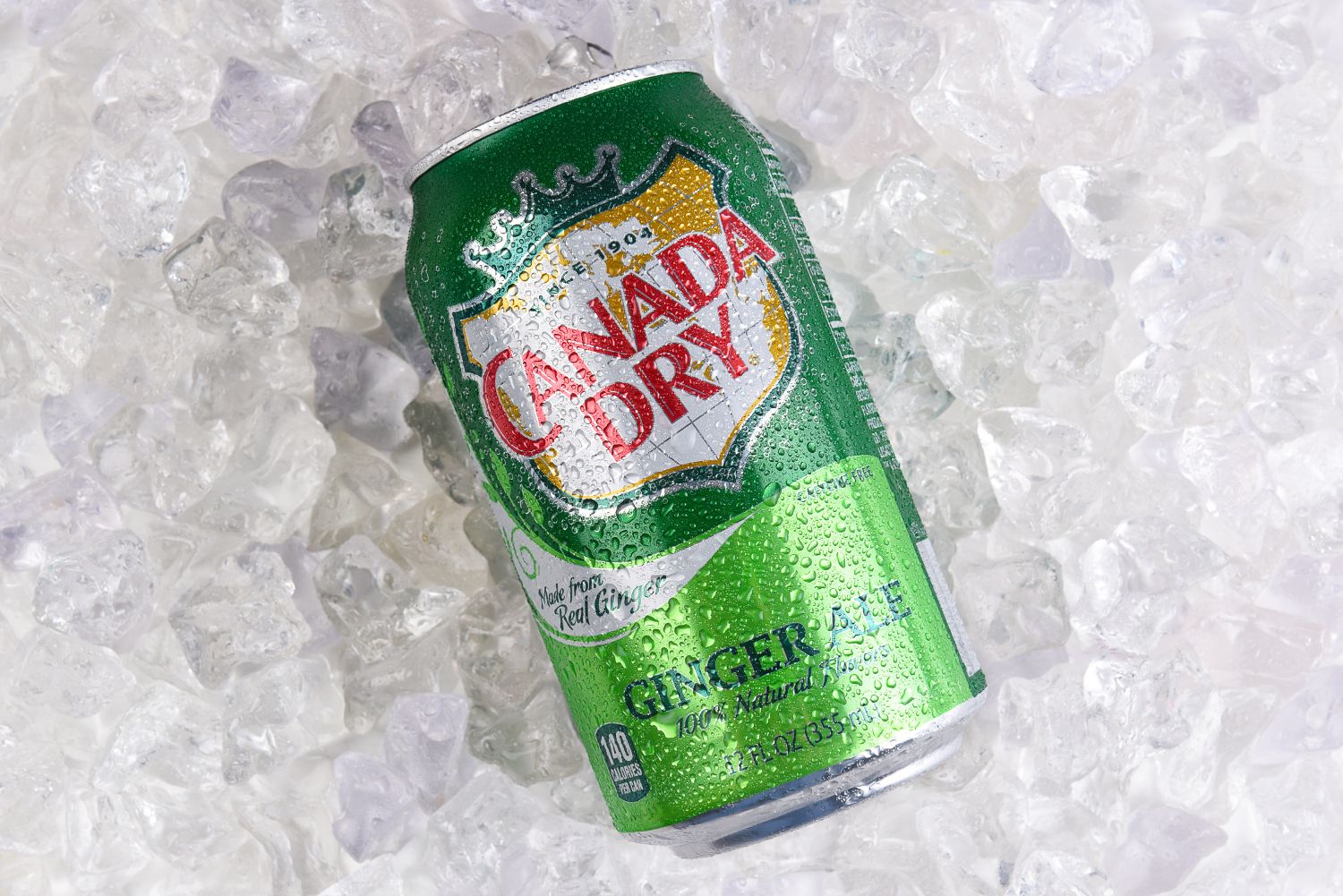
Ginger has genuine, well-documented properties. It settles a stomach. Generations of Canadian parents have handed a glass of ginger ale to a nauseated kid on that basis — a folk remedy passed down as common sense.
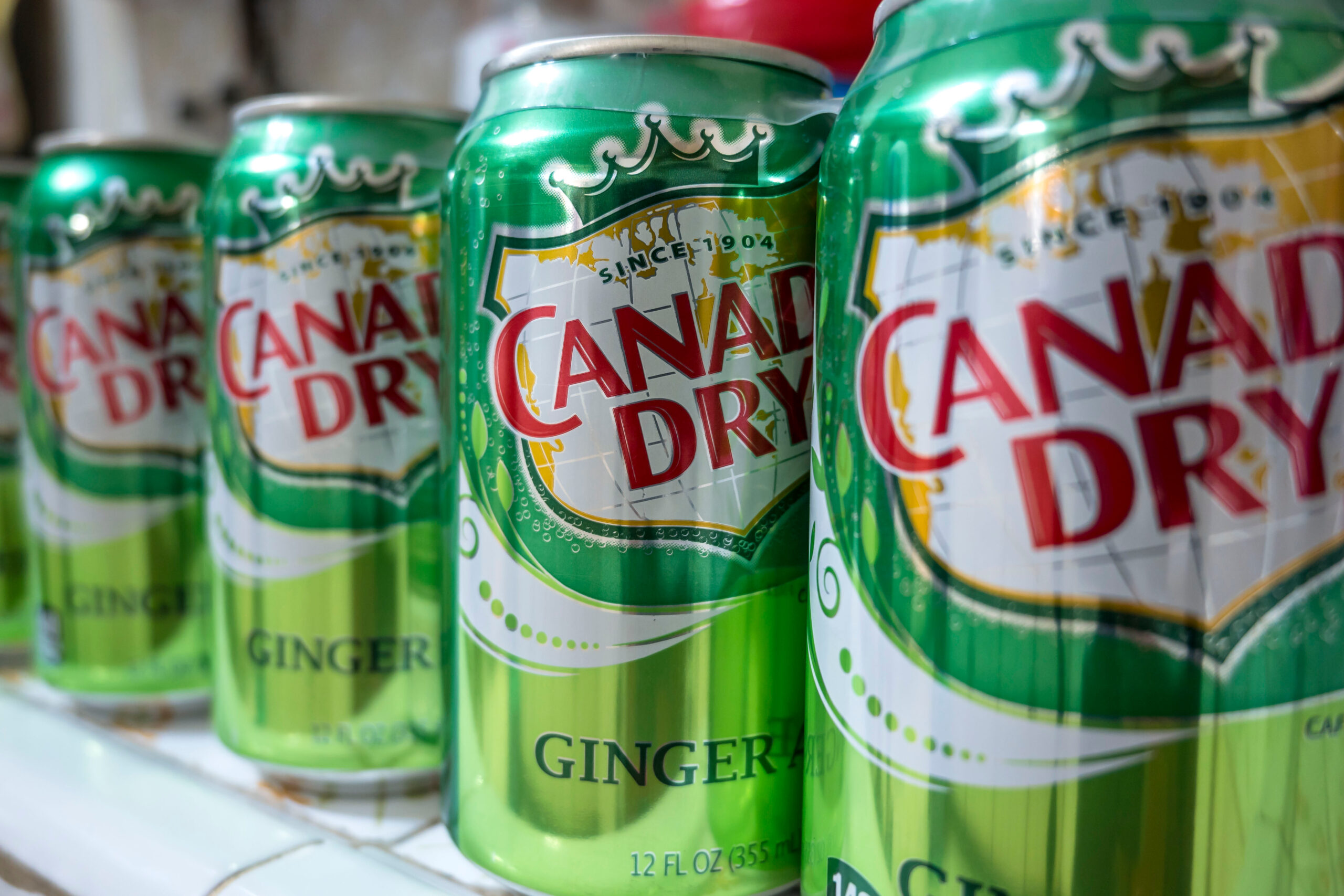
Canada Dry’s label said “Made from Real Ginger.” Its marketing went further: a campaign built around “Jack’s Ginger Farm,” featuring ginger root being pulled fresh from the soil, with bottles of ginger ale attached to the root itself.
The ingredients on a Canadian can: carbonated water, sugar/glucose-fructose, citric acid, sodium benzoate, colour, natural flavour.
The turn
The company’s defence, and it is worth understanding because it worked, was that the statement was literally true. There is ginger in there. Plaintiff Victor Cardoso conceded the point himself: the soda contains small amounts of ginger derivatives.
The question was how small.
Per testimony reported by CTV News, the ginger is processed into a concentrate, and that concentrate is dosed at a rate of one drop per seventy cans. A drop is 0.05 millilitres. Divide it out: each can receives roughly seven ten-thousandths of a millilitre of ginger concentrate — and the concentrate is itself a refined derivative, stripped of the compounds that make ginger do anything at all.
It is not a lie to say there is ginger in the can. It is simply a fact arranged to produce a false belief.
One of the plaintiff’s own lawyers put the mechanism precisely in an affidavit: the defendant appeared to be trading on the halo of health benefits associated with real ginger, but never went so far as to expressly make the claim. Canada Dry never said the drink was medicinal. It didn’t have to. It showed you a farm and let you finish the sentence yourself.
Readers of our Lysol entry will recognise the structure exactly. There, the Comstock laws made the claim illegal to state, so the industry built a euphemism. Here, the claim would be illegal to state because it is false — so the company built an image instead. Same manoeuvre, ninety years apart: say something defensible, show something else, let the customer do the lying to themselves.

The bill — United States
Two American class actions produced an $11.2 million settlement covering purchases between January 2013 and December 2018.
- Tier 1: 40 cents per can, up to 13 cans — a maximum of $5.20 per household, no receipt required.
- Tier 2: 40 cents per can, up to 100 cans — a maximum of $40 per household, receipts required.
- The label: Canada Dry agreed to stop claiming “Made from Real Ginger,” and to use words like “taste,” “extract” or “flavor” if it continued to reference ginger.
Five dollars and twenty cents. It is almost funny, and it is the good outcome.
The bill — Canada
Victor Cardoso filed in the Supreme Court of British Columbia in January 2019, on behalf of every Canadian who bought Canada Dry marketed as “Made from Real Ginger.” Parallel actions were filed in Alberta and Quebec.
Here is what Canadians received.
- Total settlement: $200,000, plus $18,607 in disbursements.
- Roughly $100,000 went to legal costs — against more than $220,000 the lawyers had actually spent litigating it.
- Cardoso and the Alberta plaintiff each received a $1,500 honorarium.
- The remainder went to the Law Foundation of British Columbia. No class members were paid.
- Canada Dry Mott’s expressly denied liability.
- The company was not required to change its labelling or advertising in Canada at all.
The Alberta action was dropped as a condition of the deal.
“The ultimate purpose of the class-action vehicle is to benefit the class, not their lawyers.”
Justice Karen Douglas approved the settlement, while warning that an award in which counsel received more than the class could be viewed adversely by the public.
United States
Up to $5.20Per consumer, plus a corrected label.
Canada
$0Per consumer, with the same label unchanged.
The company dropped the claim in the United States because an American court made it. It kept the claim here because a Canadian court didn’t.
The laundering
There was no rebrand, and that is the finding.
Every other company in this series at least had to perform contrition — change a formula, retire a brand, rename a product, pivot to electric. Canada Dry Mott’s paid two hundred thousand dollars, admitted nothing, changed nothing north of the border, and went back to work. The cost of resolving a national false-advertising class action in Canada was less than the price of a mid-range pickup truck.
A new class action was filed against Keurig Dr Pepper in October 2024, alleging that Canada Dry and Schweppes beverages are advertised as “naturally flavored” without disclosing that they also contain artificial flavours. The genre continues.
The lesson
This series has spent seven entries documenting fines that amounted to six days of revenue, families who extracted eleven billion dollars ahead of the reckoning, and settlements that forbade conduct already abandoned. The objection to all of it is obvious: those were hard cases. Complex science. Long latencies. Aggressive lawyers on both sides.
So here is the easy case. A soft drink. A slogan. A farm that wasn’t. No dispute about causation, no expert witnesses, no thirty-year latency, no chemistry to argue over. A Canadian court looked at it, agreed the class had a point, and delivered an outcome in which the lawyers lost money, the class received nothing, the company admitted nothing, and the label stayed exactly as it was.
If that is what accountability looks like when the facts are trivial and undisputed, stop being surprised by what it looks like when the facts are asbestos.
The machinery isn't failing under the weight of hard cases. It failed on ginger ale.
Sources
- Supreme Court of British Columbia. Victor Cardoso v. Canada Dry Mott’s Inc., Case No. S190672 — the primary proceeding. Costs decision released October 2020; settlement approved March 2020 for Canadians outside Quebec.
- CBC News. “B.C. man’s lawsuit over marketing of Canada Dry ginger ale settled for $200,000,” 30 October 2020 — settlement and disbursement figures; no required Canadian label change; payments; ingredient list; and Cardoso’s concession regarding ginger derivatives.
- Global News. “Canada Dry to pay $200K court settlement after B.C. man questions ‘made from real ginger’ slogan,” 30 October 2020 — Justice Karen Douglas’s remarks and legal-cost figures.
- VICE. “Canada Dry Settles for $200k After Man Sues Over Lack of ‘Real Ginger’” — filing date, settlement conditions, counsel affidavit, and the “Jack’s Ginger Farm” campaign.
- CTV News. Reporting on ginger concentrate dosing — “one drop fills 70 cans,” with a drop measured at 0.05 ml.
- Top Class Actions. U.S. settlement terms — $11.2 million total; reimbursement tiers; class periods; required label changes; and the October 2024 Keurig Dr Pepper action.
Canada Dry never expressly claimed its ginger ale was medicinal, and its statement that the product contains ginger is literally true. The plaintiff conceded both points. This piece is about what a true statement was arranged to make people believe — and about what the courts did once that was established. — Breaking the Echo Chamber