Purdue Pharma — They Pleaded Guilty, Then Kept Going
In May 2007, Purdue admitted in federal court that it had lied about how addictive OxyContin was. The same month, by its own later admission, it began a new conspiracy to defraud the DEA. That one ran another ten years.
What does a guilty plea mean when the same conduct starts again before the courthouse doors have closed?
A series about products whose public image survived long after the evidence against them had accumulated.
Purdue is not merely a story about a product marketed dishonestly. It is a test of whether corporate punishment has any meaning when a company can plead guilty, absorb the penalty, begin again, and move the proceeds beyond the reach of the people it harmed.
The other entries in this series describe companies that got caught and then changed the story. Purdue is the case that tests whether getting caught means anything at all — because Purdue got caught, pleaded guilty, paid a record fine, and carried on. Then it got caught again.
And in between, its owners took the money out.
What it was
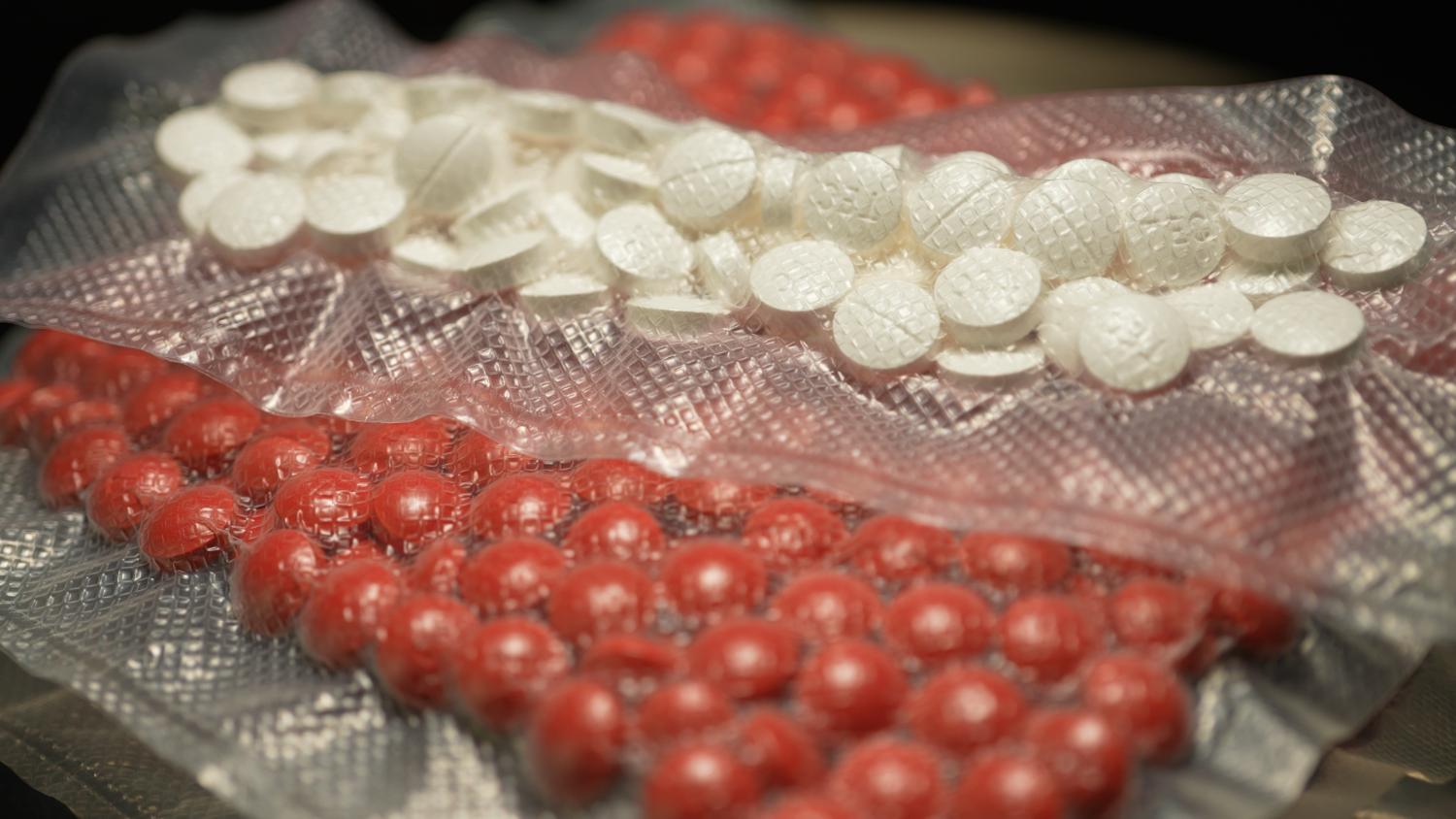
The Sackler family has owned Purdue since the 1950s, with family members in senior leadership and on the board throughout. OxyContin launched in the mid-1990s.
The pitch to physicians was that OxyContin’s time-release formulation made it less addictive and less prone to abuse than immediate-release painkillers. The House Oversight Committee’s finding was blunt: Purdue created false advertising documents telling doctors and patients exactly that, and then sought out the physicians most likely to prescribe opioids and encouraged them to prescribe more, because the drug was supposedly safe.
The 12-hour problem
Here is the mechanism, and it is the part most retellings miss. OxyContin was sold as a twelve-hour drug — that was the entire competitive advantage over cheaper alternatives. For many patients it did not last twelve hours. Purdue knew this, per the Los Angeles Times investigation, for decades.
One dosing interval
The label permitted a dose every twelve hours. For many patients the drug wore off before that. How much earlier varied by patient — so the shortfall is drawn as a range, not a figure.
When prescribers raised it, Purdue’s instruction was not to dose more frequently. It was to increase the dose — and higher doses of an opioid are more dangerous. The hatched band is not “breakthrough pain” in the abstract. It is early withdrawal, on a schedule, several times a week.
The dosing regimen didn’t just fail to prevent addiction. It manufactured the withdrawal-craving cycle that produces it — and the company’s answer was a bigger pill.
Purdue also paid third-party advocacy groups to campaign against opioid-limiting laws and guidelines, and used what the Union of Concerned Scientists calls “The Screen” — borrowing the credibility of medical schools and hospitals, including the Massachusetts General Hospital Purdue Pain Program launched in 2002. Between 2006 and 2015, the pharmaceutical industry spent almost $900 million on lobbying and campaign contributions.
The first conviction — and what it changed
In May 2007, Purdue and three executives pleaded guilty to federal charges of misbranding OxyContin as less addictive and less abusable than alternatives. The company paid more than $600 million in criminal penalties — at the time, one of the largest fines ever levied against a pharmaceutical firm.
Now hold that date in your head.
The same month it stood in a courtroom and admitted lying about the drug, it began a decade-long conspiracy against the agency responsible for policing it. The conviction was not a deterrent. It was a line item.
Purdue has now pleaded guilty to four felonies over three decades. More than 2,600 federal and state lawsuits followed the 2007 settlement alone.
The bill
This is where the arithmetic stops being abstract. The United States Supreme Court, in Harrington v. Purdue Pharma (June 2024), described what the Sacklers did next in language no press release can soften. Fearful that the litigation would eventually reach them personally, the family initiated what the Court called a “milking program” — withdrawing approximately $11 billion from Purdue, roughly 75 percent of the firm’s total assets.
Set the numbers side by side
All figures in US dollars, drawn to the same linear scale. The penalties are not small on that scale by accident — that is the point.
The company paid the fines. The family took out more than the company was worth, and settled its own exposure for roughly two percent of what it had extracted. Then the company declared bankruptcy — and the bankruptcy became the mechanism by which victims’ claims were capped.
A fine a company can pay is not a punishment. It is a price. And a price is something you decide whether to pay again.
Her son’s death certificate lists oxycodone as a factor — and that may not be enough proof.
A mother, on what the claims administrator requires — as reported by 60 Minutes. Paraphrase, not a verbatim quotation.The U.S. Department of Health and Human Services has estimated the opioid epidemic’s cost to the country in the range of $53 to $72 billion. Against that, a proposed $7.4 billion settlement is not restitution. It is a rounding error negotiated by lawyers. The people who lost children are asked to document their loss to a claims administrator.
The laundering
Purdue’s response to the lawsuits was to pivot to abuse-deterrent formulations — reformulating the pill so it was harder to crush — while continuing to market and sell opioids as late as 2019.
The reformulation is real. It is also, in marketing terms, perfect: it lets a company answer “your drug is being abused” with a product update rather than an admission.
The family name went the other way — onto museum wings, university buildings, and gallery entrances across the world, until the institutions began, slowly and reluctantly, to scrape it off.
The lesson
Purdue is the entry that proves the rest of this series matters. Every other company here could argue it didn’t know, or that the science was unsettled, or that the era was different. Purdue knew, admitted it in open court, paid, and continued — while its owners removed three-quarters of the company’s assets ahead of the reckoning.
The rebrand wasn’t the abuse-deterrent pill or the museum wings. The rebrand was the bankruptcy itself — the transformation of a profitable criminal enterprise into an insolvent estate that could only pay pennies.
Sources
Primary and reported sources consulted
- Supreme Court of the United States — Harrington v. Purdue Pharma L.P., No. 23-124, decided 27 June 2024 (supremecourt.gov) — source for the “milking program” characterisation, the ~$11 billion in withdrawals representing roughly 75% of Purdue’s total assets, the 2007 felony misbranding plea, and the HHS $53–$72 billion epidemic cost estimate.
- U.S. Department of Justice — “Opioid Manufacturer Purdue Pharma Pleads Guilty to Fraud and Kickback Conspiracies,” 2020 (justice.gov) — Purdue’s admission that from May 2007 through at least March 2017 it conspired to defraud the United States by impeding the DEA; $2.8 billion civil False Claims Act bankruptcy claim; the Sackler family’s separate $225 million civil FCA settlement.
- U.S. House Committee on Oversight and Reform — Hearing, “The Role of Purdue Pharma and the Sackler Family in the Opioid Epidemic,” 116th Congress (govinfo.gov) — the $1.3 billion in withdrawals 1995–2007 per bankruptcy audit; testimony that ~90% of Purdue’s profit came from OxyContin; the false advertising finding; the 2007 plea and $600M+ penalty.
- Los Angeles Times — Ryan, H., Girion, L. & Glover, S. “‘You want a description of hell?’ OxyContin’s 12-hour problem,” 5 May 2016 — the investigative series establishing that Purdue knew OxyContin did not last 12 hours for many patients.
- Union of Concerned Scientists — “Disinformation Playbook: Purdue Pharma” — the instruction to increase dose rather than frequency; payments to third-party advocacy groups; “The Screen” and the 2002 Massachusetts General Hospital Purdue Pain Program; the ~$900M industry lobbying figure, 2006–2015.
- Patrick Radden Keefe — “The Family That Built an Empire of Pain,” The New Yorker, October 2017 — and Empire of Pain (2021). Source for the Forbes net-worth assessment of ~$13 billion.
- The New York Times — Meier, B. “In Guilty Plea, OxyContin Maker to Pay $600 Million,” 10 May 2007.
- CBS News / 60 Minutes — “Why a potential $7.4 billion Purdue Pharma opioid settlement frustrates some victims,” March 2025 — four felony pleas over three decades; victim and family accounts of the claims process.