Volkswagen “Clean Diesel” — The Car That Knew When It Was Being Watched
Every other entry in this series is a company that changed the story about a product. This one is the opposite. Volkswagen built a product whose entire purpose was to tell a story — and then only when someone was listening.
Marketing usually sits on top of a product like a coat of paint. You can scrape it off and the object underneath is unchanged — the talc is still talc, the formula is still formula. Dieselgate is the case where the marketing went inside. The lie was not printed on the brochure. It was compiled into the firmware.
This is the purest specimen in the entire series, and it is worth being precise about why: Volkswagen did not exaggerate a green claim. It engineered a machine to produce the evidence for a green claim, on demand, under observation, and to stop the moment nobody was checking.
What it was

Diesel engines are more fuel-efficient than petrol engines and emit less carbon dioxide. They also emit far more nitrogen oxides — NOx — which drives smog and respiratory illness. Controlling NOx costs you power and fuel economy. That trade-off is the whole engineering problem, and the industry calls it the diesel dilemma.
Volkswagen claimed to have solved it. The campaign was called “Clean Diesel,” and it was a genuine cultural success. It had not solved the dilemma. It had automated the appearance of having solved it.
The turn
Beginning with model year 2009, VW installed software in its turbocharged direct injection diesel engines that detected when the vehicle was undergoing a laboratory emissions test. The firmware watched four inputs — a combination that maps almost exactly onto the EPA’s FTP-75 test protocol.
- 01steering wheel position
- 02vehicle speed
- 03duration of engine operation
- 04barometric pressure
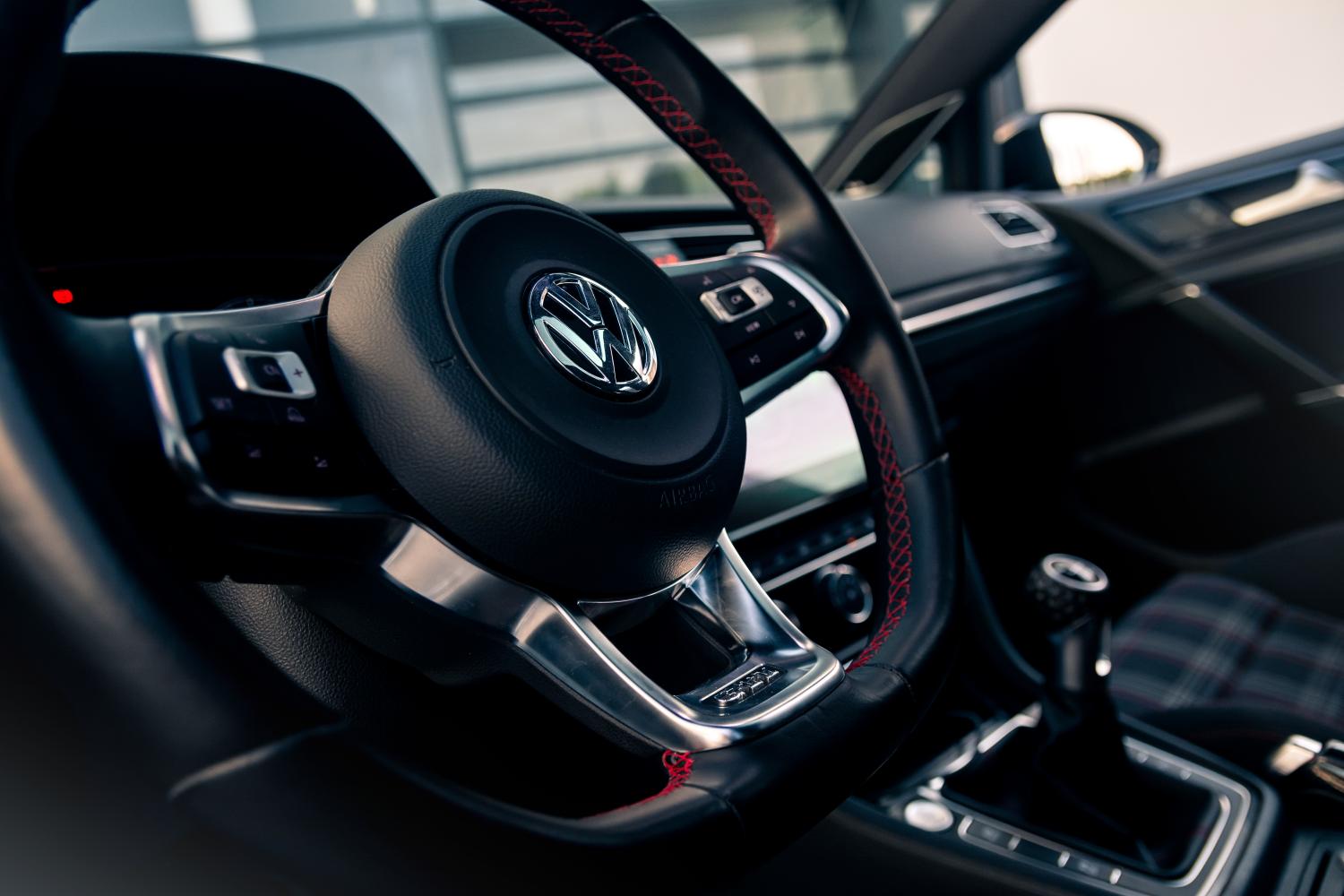
On the test rig, the emissions controls came fully alive and the car passed. On the road, they were throttled back, delivering the power and economy the marketing promised — while emitting up to 40 times the legal NOx limit.
The car was not built to be clean. It was built to know when it was being watched.
The software went into roughly 11 million vehicles worldwide — about 482,000 to 499,000 in the United States, across model years 2009 to 2015.
A second EPA notice in November 2015 covered 3.0-litre engines in Volkswagen, Audi, and Porsche models, emitting up to nine times the standard.
On 19 November 2015, VW informed the EPA that the defeat device had been present in every one of its U.S. 3.0-litre models since 2009.
How they were caught — and the irony nobody planned
In 2013 the International Council on Clean Transportation contracted West Virginia University’s Center for Alternative Fuels, Engines and Emissions to run real-world road tests on light-duty diesels using portable emissions measurement equipment.
The study was designed to prove diesel was clean. ICCT wanted to demonstrate that American diesel technology met tough standards in real-world conditions — evidence they hoped would persuade Europe to adopt the U.S. approach.
Three cars, tested on the road
Real-world NOx emissions, expressed as a multiple of the legal limit. ICCT / West Virginia University, 2013–14.
The BMW exceeded the standard only on rural uphill runs. That result removed the technical-feasibility excuse.
The WVU researchers never identified the defeat device. They reported numbers that made no sense and handed them to the EPA and CARB in May 2014.
Volkswagen blamed technical issues and unexpected real-world conditions, then offered a voluntary recall. The fix did not fix anything.
In September 2015, the EPA threatened to withhold certification for Volkswagen’s 2016 model year. The company finally admitted what it had done.
What it cost
Volkswagen’s share price fell roughly a third. It set aside $7.3 billion and posted its first quarterly loss in fifteen years.
The defence
Michael Horn, then CEO of Volkswagen Group of America, appeared before the House Energy and Commerce Committee.
a couple of rogue software engineersMichael Horn, CEO, Volkswagen Group of America
Every large fraud eventually produces the same sentence: it was a few bad apples, acting alone, for years, at scale, in writing.
The laundering
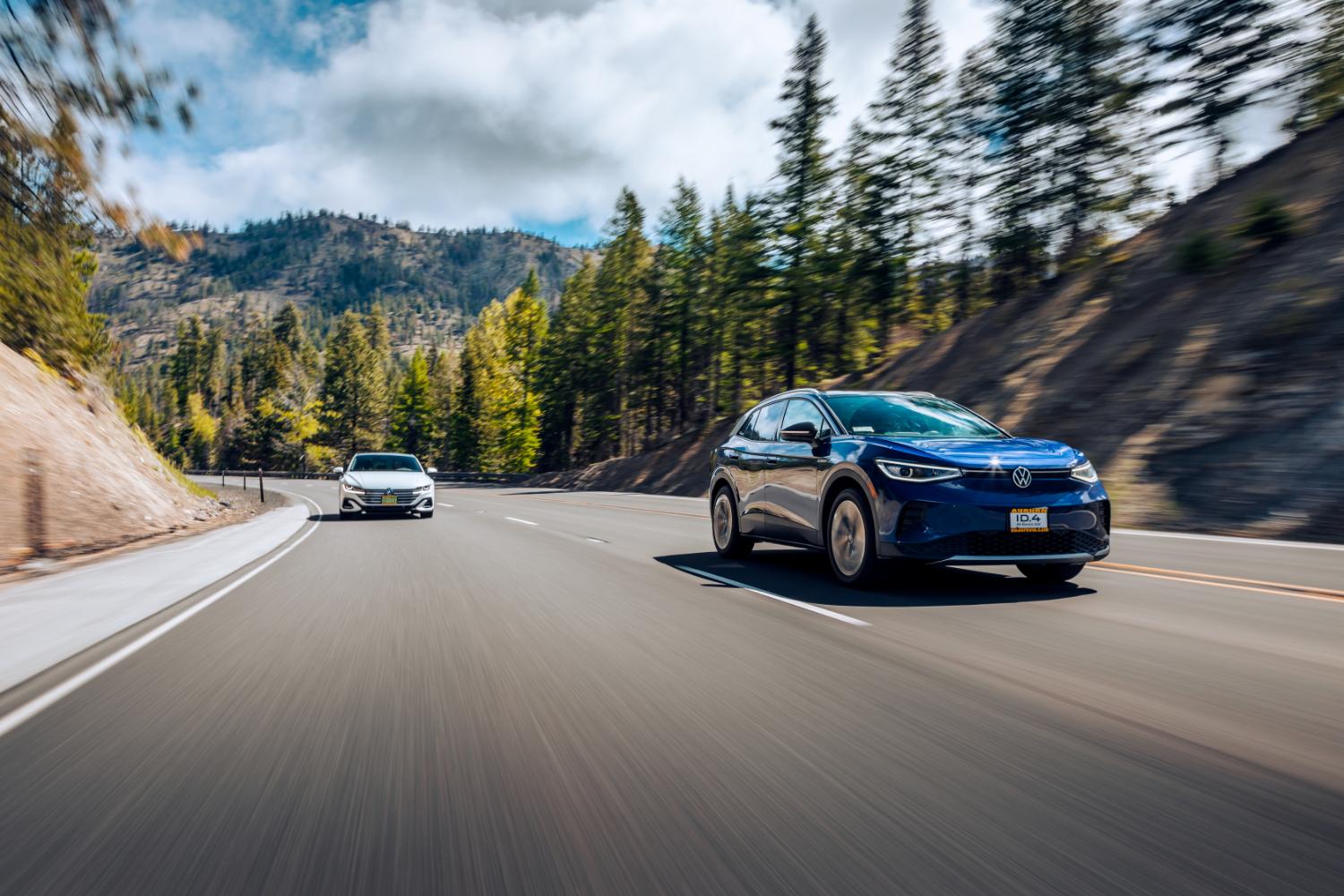
The rebrand was total, and — this is the uncomfortable part — substantially real. “Clean Diesel” vanished from the vocabulary. In its place came ID.3, ID.4 and ID. Buzz.
Volkswagen pleaded guilty, paid and changed direction.
The company that got caught selling environmental virtue it had not built is now selling environmental virtue again — with better products, a criminal conviction behind it and every commercial reason to be believed.
The question is not whether the electric cars are real. It is why the felony conviction was required to find out.
The lesson
Dieselgate is the clearest proof this series has that the rebrand is not decoration — it is infrastructure.
The scandal was not that they lied about the car. The scandal is that they built the car to do the lying.
A claim that can only be verified under conditions the seller controls is not a claim. It’s a performance.
Sources
Primary and reported sources consulted
- U.S. Environmental Protection Agency — Notice of Violation of the Clean Air Act to Volkswagen AG, Audi AG and Volkswagen Group of America, 18 September 2015.
- U.S. EPA — “Learn About Volkswagen Violations” — chronology, guilty plea, criminal penalty and civil resolution.
- International Council on Clean Transportation — ICCT and West Virginia University real-world emissions testing.
- Congressional Research Service — “Volkswagen, Defeat Devices, and the Clean Air Act.”
- U.S. House Energy and Commerce Committee — Testimony of Michael Horn, October 2015.
- Contemporaneous reporting — trigger conditions, financial provisions, share-price decline and Volkswagen’s subsequent electric-vehicle strategy.